
Introduction: The Art of Engaging in Complex Discussions
Engaging in complex discussions on global issues is not just about fluency; it’s an art. Today, we’ll explore the top 10 strategies that will help you master this art at the B2 level.
1. Active Listening: The Foundation
Active listening is key. It’s not just about hearing words; it’s about understanding and responding. By truly listening, you’ll not only grasp the speaker’s viewpoint but also show respect and foster a productive discussion.
2. Asking Clarifying Questions: Unveiling Deeper Meanings
Don’t hesitate to ask for clarification. Complex discussions often involve intricate ideas. By seeking clarity, you not only enhance your understanding but also encourage others to elaborate, leading to a richer conversation.
3. Building on Others’ Ideas: Collaboration is Key
Rather than just presenting your thoughts, build on what others have said. This shows engagement, respect, and a willingness to collaborate. It also helps in creating a cohesive discussion with diverse perspectives.

4. Using Connectors: Seamless Transitions
Connectors like ‘however,’ ‘on the other hand,’ or ‘in addition’ are invaluable. They not only make your speech more coherent but also indicate your ability to link ideas, a crucial skill in complex discussions.
5. Paraphrasing: Demonstrating Understanding
Paraphrasing is more than just repeating. It’s about rephrasing someone’s idea in your own words, showcasing comprehension. It also allows for confirmation, ensuring you’ve interpreted the speaker’s message correctly.
6. Polite Disagreements: Navigating Conflicting Opinions
Disagreements are natural in discussions, but how you express them matters. Use phrases like ‘I see your point, but have you considered…’ to convey a differing opinion respectfully, fostering a healthy exchange.
7. Summarizing: Consolidating Ideas
Periodically summarizing the discussion’s key points not only helps in keeping everyone on track but also showcases your ability to synthesize information, a vital skill in complex conversations.
8. Non-Verbal Cues: The Unspoken Language
Remember, communication is not just verbal. Your facial expressions, gestures, and body language all play a role. Maintaining eye contact, nodding, or using appropriate hand movements can enhance your message’s impact.
9. Research: The Power of Knowledge
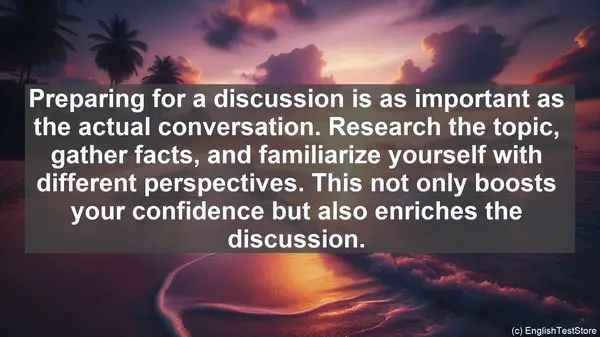
Preparing for a discussion is as important as the actual conversation. Research the topic, gather facts, and familiarize yourself with different perspectives. This not only boosts your confidence but also enriches the discussion.
10. Practice, Practice, Practice: The Road to Mastery
Lastly, don’t underestimate the power of practice. Engage in discussions regularly, both in formal and informal settings. The more you immerse yourself, the more refined your skills will become.