
10 Tips to Improve Your English Pronunciation Perfectly
10 Tips to Improve Your English Pronunciation Perfectly

10 Tips to Improve Your English Speaking Skills
10 Tips to Improve Your English Speaking Skills

10 Tips to Learn English Grammar Efficiently
10 Tips to Learn English Grammar Efficiently . Let's take a look.

10 Tips to Prepare For a Perfect English Writing Test
10 Tips to Prepare For a Perfect English Writing Test You Must Know

10 Tips to Improve Your English Reading Skills
These 10 Tips to help you Improve Your English Reading Skills

10 Tips to Improve Your English Listening Skills
10 Tips to Improve Your English Listening Skills

10 Tips to Write a Good TOEFL Essay
10 Tips to Write a Good TOEFL Essay. Tip 1: Understand the prompt. Carefully read the prompt and make sure you understand what is being asked of you before you start writing.

10 tips to learn English vocabulary efficiently
10 tips help you learn English vocabulary efficiently

Path to Excellence Mastering Skills for the TOEFL iBT Listening Section
Practice TOEFL Test: https://englishteststore.net/index.php?option=com_content&view=article&id=11507&Itemid=216 Path to Excellence: Mastering Skills for the TOEFL iBT Listening Section 1. Grasp the Structure Before diving into any preparation, familiariz
TOEFL iBT Listening Tips and Strategies
Practice TOEFL Test: https://englishteststore.net/index.php?option=com_content&view=article&id=11507&Itemid=216 TOEFL iBT Listening Tips and Strategies 1. Familiarize Yourself with the Format Before you delve into any practice, get to know the structure o

TOEFL iBT Listening Tips and Tricks
Practice TOEFL Test: https://englishteststore.net/index.php?option=com_content&view=article&id=11507&Itemid=216 TOEFL iBT Listening Tips and Tricks 1. Know the Landscape Before attempting any practice questions, familiarize yourself with the Listening sec

Unlocking Success Top TOEFL iBT Listening Tips for Stellar Scores
Practice TOEFL Test: https://englishteststore.net/index.php?option=com_content&view=article&id=11507&Itemid=216 Unlocking Success: Top TOEFL iBT Listening Tips for Stellar Scores 1. Dive Deep into the Format Understanding the test’s layout is the first st

Common TOEFL iBT Reading Topics
Common TOEFL iBT Reading Topics If you're preparing for the TOEFL iBT, understanding common reading topics can give you an edge. Let's explore them! Social Science Topics Under Social Science, we have: Psychology, the study of the human mind. Sociology, e
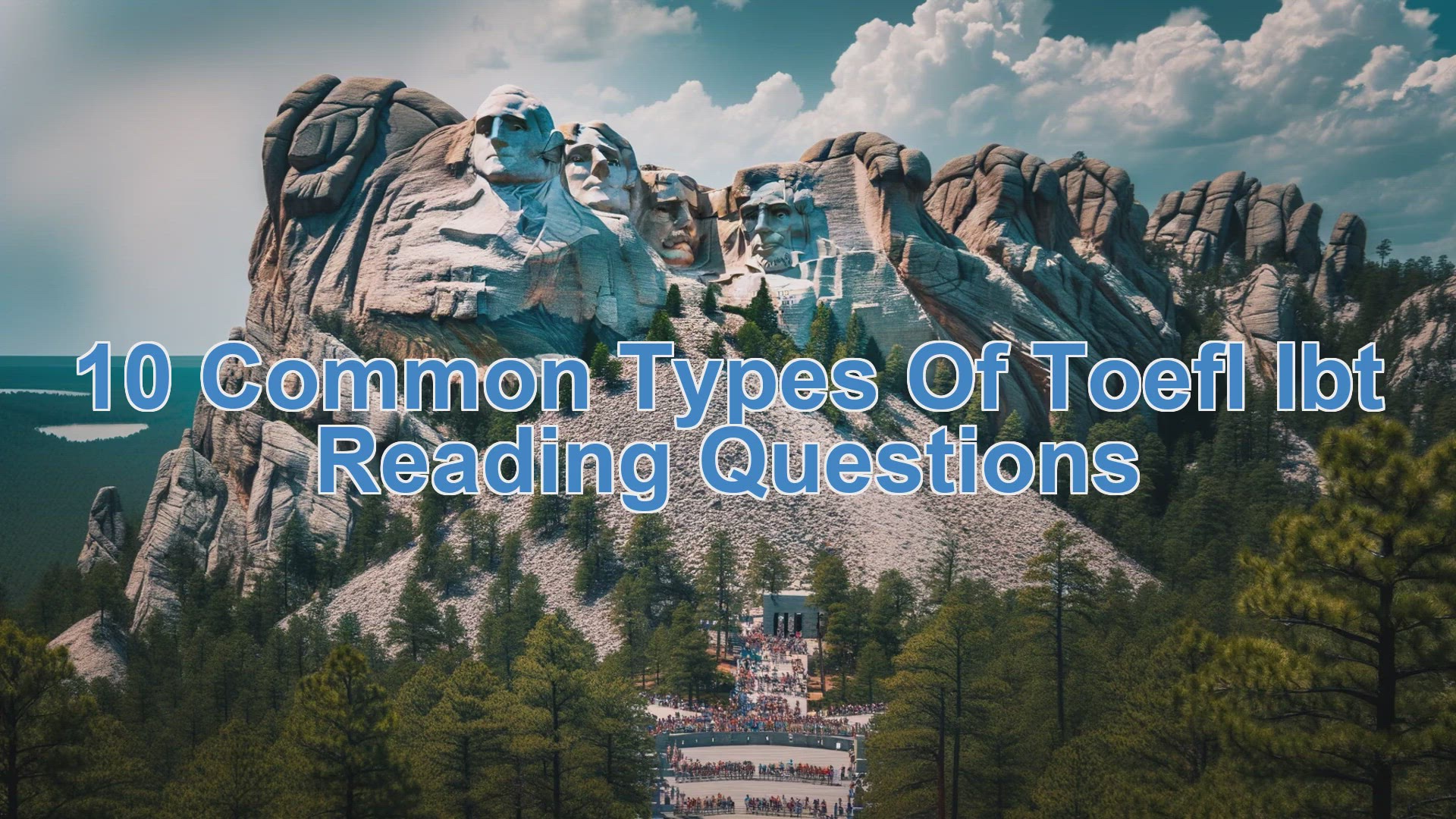
10 common types of TOEFL iBT reading questions - New Format
10 common types of TOEFL iBT reading questions 1. Factual Information question starting with phrases like "According to the paragraph" or "Paragraph ...". 2. Negative Factual Information question starting with "According to the paragraph, which of the fol

English grammar rules: Unless
English grammar rules: Unless Peter: Unless we're there at 8 o'clock we won't get anything to eat! Unless is followed by a subject and verb, like this: Peter: Unless we are there at 8 o'clock… Unless means only if or except if. The second part of the sent

English grammar rules: Time prepositions
English grammar rules: Time prepositions Hi! we heard three different prepositions; at, in and on. We use these prepositions when we're talking about time but we use each one with different time expressions. Example: In the morning, at 3 o'clock. In 2004

English Adjectives Understanding Descriptive Power
English Adjectives: Understanding Descriptive Power Definition of Adjectives Adjectives are words that describe or modify another person or thing in a sentence. They can give information about size, color, shape, quantity, quality, or almost any other cha

Grammar Explanation Verb, object, to + infinitive
Grammar Explanation: Verb, object, to + infinitive English reporting verbs like tell, warn, remind and encourage, are often followed by an object and then an infinitive with 'to', like this: Jane: Well, I told him to be nice to everybody I told him to be.

Grammar Explanation: Used to and didn't use to
Grammar Explanation: Used to and didn't use to When we want to talk about the past and things that we did regularly, things that were habits, we say "used to" followed by the base form of the verb, which is the infinitive without ‘to'. That's ‘used' use

Grammar Explanation: To, for, so that
Grammar Explanation: To, for, so that In English, when we want to talk about purpose, or the reason why we do things, we can use to, we can use for and we can use so that. Firstly we can use for with an –ing verb. Here's Jane: Jane: I'm bringing some pots
English Grammar Explanation: Zero conditional
English Grammar Explanation: Zero conditional When we want to talk about a possible or imaginary situation (a condition) and the consequences of it (the result), we can use a structure called 'the zero conditional'. In this structure we're talking about

English Adverbs: How to form and use in English?
English Adverbs: Amplifying Meaning and Action Definition of Adverbs Adverbs are versatile words that modify verbs, adjectives, other adverbs, or even whole sentences. They provide additional information about how, when, where, how much, or under what con

English Articles: The Definite and Indefinite Guides
English Articles: The Definite and Indefinite Guides Definition of Articles Articles in English are small, yet essential words that go before nouns and help define them in terms of definiteness or indefiniteness. They act as identifiers, signaling whethe

English Plural Nouns: A Comprehensive Guide
English Plural Nouns: A Comprehensive Guide Definition of Plural Nouns A plural noun refers to more than one person, place, thing, idea, or event. In the English language, nouns are typically made plural to indicate a quantity greater than one. For inst