Top 10 Commonly Confused Words in Clinical Gerontology

Introduction

Welcome to today’s lesson on clinical gerontology. In this lesson, we’ll be focusing on a topic that often trips up even the most seasoned professionals: commonly confused words. Understanding the nuances between these terms is crucial in the field of gerontology, where precision is key. So, without further ado, let’s dive in!

1. Elderly vs. Senior

While both ‘elderly’ and ‘senior’ refer to individuals in the later stages of life, there’s a subtle difference. ‘Elderly’ is a more general term, indicating old age, whereas ‘senior’ often implies a higher status or authority, such as a senior citizen. It’s important to use these terms appropriately, considering the context.

2. Dementia vs. Alzheimer’s

Dementia and Alzheimer’s are often used interchangeably, but they’re not the same. Dementia is an umbrella term for a decline in cognitive ability, while Alzheimer’s is a specific type of dementia, accounting for around 60-80% of cases. Understanding this distinction helps in accurate diagnosis and treatment planning.

3. Palliative Care vs. Hospice Care

Palliative care and hospice care both focus on improving the quality of life for patients with serious illnesses, but there’s a difference in scope. Palliative care can be provided at any stage of the illness, while hospice care is specifically for patients with a life expectancy of six months or less. Knowing this helps in appropriate care planning.

4. Comorbidity vs. Multimorbidity

Comorbidity and multimorbidity are terms used to describe the presence of multiple medical conditions in a patient. However, there’s a distinction. Comorbidity refers to the presence of additional conditions alongside a primary condition, while multimorbidity refers to the presence of multiple conditions, regardless of a primary condition. This differentiation aids in comprehensive assessment and management.

5. Geriatrics vs. Gerontology

Often used interchangeably, geriatrics and gerontology have different focuses. Geriatrics is the branch of medicine that specializes in the healthcare of older adults, while gerontology is the broader study of aging, encompassing various disciplines. Recognizing this difference is essential in understanding the comprehensive nature of gerontological care.

6. Activities of Daily Living (ADLs) vs. Instrumental Activities of Daily Living (IADLs)

ADLs and IADLs are terms used to assess an individual’s functional abilities. ADLs refer to basic self-care tasks like eating and bathing, while IADLs encompass more complex activities like managing finances and transportation. This differentiation helps in gauging a person’s overall independence and need for support.

7. Geriatric Syndromes vs. Disease

Geriatric syndromes are conditions commonly seen in older adults, characterized by multifactorial causes and complex presentations. They differ from specific diseases, which have well-defined etiologies. Understanding this distinction aids in a holistic approach to geriatric care, addressing not just the disease but also its broader impact on the individual.

8. Polypharmacy vs. Deprescribing

Polypharmacy refers to the use of multiple medications by a patient, often with the risk of adverse effects and drug interactions. Deprescribing, on the other hand, is the process of intentionally reducing or stopping medications that may no longer be necessary or beneficial. Recognizing the need for deprescribing can help optimize medication regimens and minimize harm.

9. Ageism vs. Elder Abuse

Ageism and elder abuse are two issues that affect older adults but in different ways. Ageism refers to the discrimination or prejudice based on a person’s age, while elder abuse encompasses various forms of mistreatment, including physical, emotional, or financial. Recognizing these distinct problems is crucial in addressing them effectively.
10. Gerontechnology vs. Telemedicine

As technology plays an increasingly significant role in healthcare, it’s essential to understand the specific terms. Gerontechnology refers to the use of technology to enhance the lives of older adults, while telemedicine is the provision of healthcare services remotely, often using lesson conferencing. Knowing these terms helps in leveraging the right tools for effective care delivery.
Top 10 Commonly Confused Words in Clinical Epidemiology

Introduction

Welcome to this educational lesson on clinical epidemiology. Today, we will focus on the top 10 commonly confused words in this field. Understanding these terms is crucial for accurate communication and research. So, let’s dive in!

1. Incidence vs. Prevalence

Incidence refers to the number of new cases of a disease in a specific population over a given period. On the other hand, prevalence represents the total number of cases, both new and existing, in the same population. While incidence measures the risk of developing a disease, prevalence gives an idea of its burden.

2. Sensitivity vs. Specificity

Sensitivity measures a test’s ability to correctly identify individuals with a disease. It indicates the test’s ability to avoid false negatives. Specificity, on the other hand, measures a test’s ability to correctly identify individuals without the disease, avoiding false positives. Both measures are essential for evaluating a test’s accuracy.

3. Efficacy vs. Effectiveness

Efficacy refers to a treatment or intervention’s performance under ideal or controlled conditions, such as in clinical trials. Effectiveness, on the other hand, assesses its real-world impact and how well it works in routine practice. While efficacy demonstrates a treatment’s potential, effectiveness reflects its actual benefits.

4. Bias vs. Confounding

Bias refers to any systematic error in study design, data collection, or analysis that can lead to incorrect results. Confounding, on the other hand, occurs when the association between an exposure and an outcome is distorted by the presence of another factor. Both need to be addressed to ensure the validity of study findings.

5. Odds Ratio vs. Relative Risk

Odds ratio (OR) and relative risk (RR) are both measures of association between an exposure and an outcome. However, OR is used in case-control studies, while RR is used in cohort studies. OR represents the odds of an outcome occurring in the exposed group compared to the unexposed, while RR represents the risk of the outcome in the exposed group compared to the unexposed.

6. Randomized Controlled Trial vs. Observational Study

A randomized controlled trial (RCT) is an experimental study design where participants are randomly assigned to different interventions. It provides the highest level of evidence. Observational studies, on the other hand, observe individuals in their natural settings without any intervention. While RCTs demonstrate causality, observational studies can only show associations.

7. Hazard Ratio vs. Odds Ratio

Hazard ratio (HR) and odds ratio (OR) are both measures of association. HR is commonly used in survival analysis, while OR is used in case-control studies. HR represents the risk of an event occurring at any given time, while OR represents the odds of an event occurring at a specific point in time.

8. Systematic Review vs. Meta-analysis

A systematic review involves a comprehensive and unbiased synthesis of all relevant studies on a specific topic. It summarizes the available evidence. A meta-analysis, on the other hand, is a statistical technique that combines the results of multiple studies to obtain a pooled estimate. While a systematic review provides a summary, a meta-analysis provides a quantitative result.

9. Absolute Risk vs. Relative Risk

Absolute risk refers to the actual probability of an event occurring, such as the risk of developing a disease. Relative risk, on the other hand, compares the risk between two groups, such as the exposed and unexposed. While absolute risk gives a more intuitive understanding, relative risk provides a measure of the strength of association.

10. Confidence Interval vs. P-value

A confidence interval (CI) provides a range of values within which the true effect size is likely to lie. It gives an idea of the precision of the estimate. A p-value, on the other hand, indicates the probability of obtaining the observed results by chance alone. While a CI provides information about the magnitude of the effect, a p-value assesses its statistical significance.

Top 10 Commonly Confused Words in Clinical Biochemistry

Introduction

Welcome to today’s lesson. In the field of clinical biochemistry, there are several words that often cause confusion. Whether you’re a beginner or an advanced student, it’s essential to have a clear understanding of these terms. Today, we’ll be discussing the top 10 commonly confused words in clinical biochemistry.

1. Sensitivity vs. Specificity

One of the fundamental concepts in clinical biochemistry is the difference between sensitivity and specificity. Sensitivity refers to a test’s ability to correctly identify individuals with a particular condition, while specificity is its ability to correctly identify those without the condition. Understanding this distinction is crucial in evaluating the accuracy of diagnostic tests.

2. Accuracy vs. Precision

Accuracy and precision are often used interchangeably, but they have distinct meanings. Accuracy refers to how close a measured value is to the true value, while precision relates to the consistency of repeated measurements. In clinical biochemistry, both factors are vital for reliable and valid results.

3. Sensitivity vs. Selectivity

Similar to sensitivity and specificity, sensitivity and selectivity are terms that are sometimes confused. Sensitivity, as we discussed earlier, relates to a test’s ability to detect true positives. On the other hand, selectivity refers to its ability to avoid false positives. Both measures are essential in determining a test’s overall performance.

4. Endogenous vs. Exogenous

When studying substances in the body, such as hormones or enzymes, we often come across the terms endogenous and exogenous. Endogenous refers to substances that are naturally produced within the body, while exogenous substances are those that come from external sources. Differentiating between the two is crucial in understanding their origin and potential effects.

5. Etiology vs. Pathogenesis

In the context of diseases, etiology and pathogenesis are frequently used terms. Etiology refers to the cause or origin of a disease, while pathogenesis describes the mechanisms by which a disease develops and progresses. Understanding both aspects is vital for a comprehensive understanding of a particular condition.

6. Hyperplasia vs. Hypertrophy

When it comes to changes in tissue or organ size, hyperplasia and hypertrophy are often mentioned. Hyperplasia refers to an increase in the number of cells, leading to tissue or organ enlargement. Hypertrophy, on the other hand, involves an increase in cell size without an increase in cell number. Differentiating between the two is crucial in understanding various physiological processes.

7. Congenital vs. Hereditary

Congenital and hereditary are terms that are sometimes used interchangeably, but they have distinct meanings. Congenital conditions are those that are present at birth, regardless of their cause. Hereditary conditions, on the other hand, are inherited from one or both parents. Understanding these terms is essential in discussing various medical conditions.

8. Prevalence vs. Incidence

Prevalence and incidence are epidemiological terms that describe the occurrence of a disease in a population. Prevalence refers to the proportion of individuals with a particular condition at a given time, while incidence relates to the number of new cases that develop within a specific period. Both measures provide valuable insights into the burden and dynamics of a disease.

9. Prognosis vs. Diagnosis

Prognosis and diagnosis are terms that are often used in patient care. Diagnosis refers to the identification of a disease or condition, usually based on signs, symptoms, and diagnostic tests. Prognosis, on the other hand, relates to the predicted course and outcome of a disease. Both aspects are crucial in guiding treatment decisions and patient management.

10. Sensitivity vs. Specificity vs. Predictive Value

To wrap up our list, let’s discuss the difference between sensitivity, specificity, and predictive value. Sensitivity and specificity, as we mentioned earlier, relate to a test’s ability to correctly identify true positives and true negatives, respectively. Predictive value, on the other hand, combines these measures with the prevalence of a condition to determine the probability that a positive or negative test result is correct. Understanding these concepts is essential in interpreting and communicating test results effectively.

Top 10 Commonly Confused Words in Climatology

Introduction: The Importance of Precise Language in Climatology

Welcome to today’s lesson on the top 10 commonly confused words in climatology. As budding climate scientists, it’s crucial for us to use precise language to convey our ideas accurately. In this lesson, we’ll explore some words that are often interchanged but have distinct meanings in the context of climate science.

Section 1: Weather vs. Climate

Let’s start with a fundamental distinction: weather and climate. While these terms are related, they refer to different temporal scales. Weather describes short-term atmospheric conditions, like rain or temperature, in a specific location. Climate, on the other hand, refers to long-term patterns of weather in a region. So, while it may be hot today, a region with a generally cold climate will still experience chilly winters.

Section 2: Global Warming vs. Climate Change

Another commonly confused pair is global warming and climate change. Global warming specifically refers to the increase in Earth’s average surface temperature due to human activities, primarily the release of greenhouse gases. Climate change, however, encompasses a broader range of effects, including shifts in precipitation patterns, sea-level rise, and the frequency of extreme weather events. So, global warming is a component of climate change, but climate change is a more comprehensive term.

Section 3: Ozone Depletion vs. Greenhouse Effect

Moving on, let’s clarify the difference between ozone depletion and the greenhouse effect. Ozone depletion refers to the thinning of the ozone layer, primarily in the stratosphere, due to the release of certain chemicals. This depletion can have harmful effects, such as increased UV radiation reaching the Earth’s surface. The greenhouse effect, on the other hand, is a natural process where certain gases in the atmosphere, like carbon dioxide and methane, trap heat from the sun, leading to a warming effect. While both are environmental concerns, they have distinct causes and consequences.

Section 4: El Niño vs. La Niña

Now, let’s dive into El Niño and La Niña. These are two phases of the El Niño-Southern Oscillation (ENSO) cycle, which affects global weather patterns. El Niño refers to the warming of the central and eastern tropical Pacific Ocean, leading to changes in atmospheric circulation. This can result in altered rainfall patterns, such as increased precipitation in some regions and droughts in others. La Niña, on the other hand, is the cooling phase of the ENSO cycle, with its own set of impacts. Understanding these phenomena is crucial for predicting and managing climate-related risks.

Section 5: Mitigation vs. Adaptation

Lastly, let’s discuss mitigation and adaptation. In the context of climate change, mitigation refers to actions taken to reduce greenhouse gas emissions or remove them from the atmosphere. This can include transitioning to renewable energy sources or implementing energy-efficient practices. Adaptation, on the other hand, involves adjusting to the current and projected impacts of climate change. This can include building infrastructure to withstand extreme weather events or implementing agricultural practices that are resilient to changing conditions. Both mitigation and adaptation are essential strategies for addressing climate change.

Top 10 Commonly Confused Words in Climate Science Communication

Introduction

Climate science is a complex field, and sometimes the terminology can be confusing. In this lesson, we’ll explore the top 10 commonly confused words in climate science communication. By the end, you’ll have a clearer understanding of these terms and be better equipped to navigate climate discussions.

1. Weather vs. Climate

Weather and climate are often used interchangeably, but they have distinct meanings. Weather refers to short-term atmospheric conditions, such as temperature and precipitation, in a specific location. Climate, on the other hand, refers to long-term patterns of weather over a region. While weather can change daily, climate represents the average conditions over a longer period, usually 30 years or more.

2. Global Warming vs. Climate Change

Global warming and climate change are related but not synonymous. Global warming specifically refers to the increase in Earth’s average surface temperature due to human activities, primarily the emission of greenhouse gases. Climate change, on the other hand, encompasses a broader range of impacts, including shifts in precipitation patterns, sea-level rise, and the frequency of extreme weather events. Global warming is a component of climate change.

3. Mitigation vs. Adaptation

Mitigation and adaptation are two strategies to address climate change. Mitigation refers to actions taken to reduce or prevent the emission of greenhouse gases, thereby slowing down global warming. Examples include transitioning to renewable energy sources and improving energy efficiency. Adaptation, on the other hand, involves adjusting to the current and future impacts of climate change. This can include building sea walls to protect against rising sea levels or implementing drought-resistant farming techniques.

4. Renewable vs. Non-renewable Energy

Renewable energy sources, such as solar and wind power, are those that can be replenished naturally and are considered sustainable. Non-renewable energy sources, like fossil fuels (coal, oil, and natural gas), are finite and will eventually run out. In addition to being a cleaner option, renewable energy is crucial for reducing greenhouse gas emissions and combating global warming.

5. Carbon Footprint

A carbon footprint is the total amount of greenhouse gases, primarily carbon dioxide, released directly or indirectly as a result of an individual, organization, or product. It’s a measure of the impact on climate change. By reducing our carbon footprint through energy conservation and lifestyle choices, we can contribute to mitigating climate change.

6. Greenhouse Effect

The greenhouse effect is a natural process that keeps the Earth’s surface warm. Certain gases in the atmosphere, known as greenhouse gases, trap heat from the sun, preventing it from escaping back into space. This is essential for maintaining a habitable temperature on Earth. However, human activities, such as burning fossil fuels, have increased the concentration of greenhouse gases, leading to enhanced global warming.

7. Ozone Layer vs. Greenhouse Effect

The ozone layer and the greenhouse effect are distinct phenomena. The ozone layer is a region in the Earth’s stratosphere that contains a high concentration of ozone (O3) molecules. It plays a crucial role in absorbing and filtering out harmful ultraviolet (UV) radiation from the sun. The greenhouse effect, as mentioned earlier, is the process by which certain gases trap heat in the atmosphere. While both are important, they serve different purposes.

8. Extinction vs. Endangerment

Extinction and endangerment are terms used to describe the status of species. Extinction occurs when a species no longer has any living individuals. It’s a permanent loss. Endangerment, on the other hand, refers to a species that is at risk of becoming extinct in the near future. It’s a warning sign, and conservation efforts can help prevent extinction.

9. Resilience vs. Vulnerability

Resilience and vulnerability are concepts used in the context of climate change impacts. Resilience refers to the ability of a system, such as a community or an ecosystem, to withstand and recover from disturbances or shocks. It’s a measure of adaptability. Vulnerability, on the other hand, represents the degree to which a system is susceptible to harm or damage. By enhancing resilience and reducing vulnerability, we can increase our capacity to cope with climate change.

10. Carbon Sink

A carbon sink is a natural or artificial reservoir that absorbs and stores carbon dioxide from the atmosphere. Forests, for example, act as carbon sinks, as trees absorb CO2 during photosynthesis. Protecting and restoring carbon sinks, such as forests and wetlands, is crucial for maintaining a balance in the carbon cycle and reducing the concentration of greenhouse gases in the atmosphere.

Top 10 Commonly Confused Words in Climate Policy

Introduction

Today, we’re going to dive into the world of climate policy. As you explore this field, you’ll come across numerous terms that may seem similar but have distinct meanings. In this lesson, we’ll unravel the confusion surrounding 10 such words. So, let’s get started!

1. Mitigation vs. Adaptation

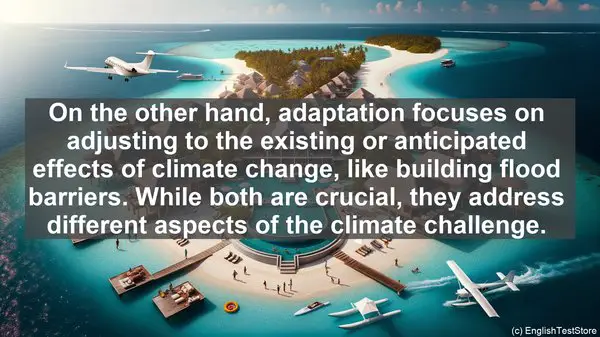
Often used interchangeably, mitigation and adaptation are two distinct strategies in climate policy. Mitigation refers to actions taken to reduce greenhouse gas emissions, such as transitioning to renewable energy sources. On the other hand, adaptation focuses on adjusting to the existing or anticipated effects of climate change, like building flood barriers. While both are crucial, they address different aspects of the climate challenge.

2. Renewable vs. Sustainable

Renewable and sustainable are often used synonymously, but they have subtle differences. Renewable refers to resources that can be naturally replenished, like solar or wind energy. Sustainable, however, encompasses not just the renewability but also the long-term environmental, social, and economic viability of a practice or resource. So, while renewable energy is a vital part of sustainability, it’s not the sole factor.

3. Carbon Footprint vs. Carbon Offset

Your carbon footprint is the total amount of greenhouse gases, primarily carbon dioxide, emitted directly or indirectly due to your activities. It’s a measure of your impact on climate change. Carbon offset, on the other hand, involves compensating for your emissions by supporting projects that reduce or remove an equivalent amount of greenhouse gases. It’s a way to balance out your carbon impact.

4. Paris Agreement vs. Kyoto Protocol

Both the Paris Agreement and the Kyoto Protocol are international treaties aimed at addressing climate change. The Kyoto Protocol, adopted in 1997, set binding emission reduction targets for developed countries. In contrast, the Paris Agreement, signed in 2015, is more comprehensive, involving both developed and developing nations. It focuses on limiting global temperature rise and enhancing climate resilience.

5. Climate Change vs. Global Warming

While often used interchangeably, climate change and global warming have distinct meanings. Global warming specifically refers to the long-term increase in Earth’s average surface temperature. Climate change, on the other hand, encompasses a broader range of effects, including shifts in precipitation patterns, sea-level rise, and more frequent extreme weather events. Global warming is a component of climate change.

6. Carbon Sink vs. Carbon Source

A carbon sink is any natural or artificial reservoir that absorbs more carbon dioxide than it releases. Forests, for example, act as carbon sinks. In contrast, a carbon source releases more carbon dioxide than it absorbs. Fossil fuel combustion, for instance, is a significant carbon source. Balancing and expanding carbon sinks while reducing carbon sources is crucial for climate stability.

7. Resilience vs. Vulnerability

In the context of climate change, resilience refers to the ability of a system, be it a community or an ecosystem, to withstand and recover from disturbances. Vulnerability, on the other hand, signifies the degree to which a system is susceptible to harm or damage. Enhancing resilience and reducing vulnerability are key aspects of climate adaptation strategies.

8. Greenwashing vs. Sustainability

Greenwashing refers to the deceptive practice of presenting a company, product, or policy as more environmentally friendly or sustainable than it actually is. It’s a form of marketing manipulation. Sustainability, on the other hand, involves genuine efforts to minimize environmental impact and ensure long-term viability. Greenwashing undermines the credibility of sustainability initiatives.

9. Decarbonization vs. Carbon Neutrality

Decarbonization involves reducing or eliminating carbon dioxide emissions, primarily from fossil fuel use. It’s a crucial step in combating climate change. Carbon neutrality, on the other hand, goes beyond just reducing emissions. It means achieving a balance between emitted and removed carbon dioxide, often through carbon offsetting. It’s a more comprehensive goal.

10. IPCC vs. UNFCCC

The Intergovernmental Panel on Climate Change (IPCC) and the United Nations Framework Convention on Climate Change (UNFCCC) are two key bodies in the global climate governance. The IPCC is responsible for assessing scientific information on climate change, while the UNFCCC is the parent treaty that guides international climate negotiations. They work in tandem to inform and shape climate policy.

Top 10 Commonly Confused Words in Climate Dynamics

Introduction: The Language of Climate Dynamics

Welcome to today’s lesson where we’ll be diving into the fascinating world of climate dynamics. Now, while the subject itself is captivating, it’s important to note that the terminology used can sometimes be a bit tricky. In this lesson, we’ll be shedding light on the top 10 words that often lead to confusion. So, let’s get started!

1. Weather vs. Climate

One of the most common misconceptions is the difference between weather and climate. While weather refers to the short-term atmospheric conditions, climate encompasses long-term patterns. Think of it this way: weather is what you experience on a daily basis, while climate is the average of those weather conditions over a longer period, usually 30 years or more.

2. Global Warming vs. Climate Change

These terms are often used interchangeably, but they have distinct meanings. Global warming specifically refers to the increase in Earth’s average surface temperature, primarily due to the buildup of greenhouse gases. On the other hand, climate change encompasses a broader range of effects, including shifts in precipitation patterns, sea-level rise, and more, all resulting from the warming of the planet.

3. Greenhouse Effect vs. Global Warming

While global warming is a consequence of the greenhouse effect, they are not the same thing. The greenhouse effect is a natural process that has been occurring for millions of years. It involves the trapping of heat by certain gases in the atmosphere, which keeps our planet warm and habitable. However, human activities, such as the burning of fossil fuels, have intensified this effect, leading to global warming.

4. Mitigation vs. Adaptation

When it comes to addressing climate change, these two strategies play a crucial role. Mitigation refers to actions taken to reduce or prevent the emission of greenhouse gases, thus tackling the root cause of climate change. On the other hand, adaptation focuses on adjusting to the changes that are already occurring or are inevitable. It involves measures like building sea walls to protect against rising sea levels or implementing drought-resistant farming techniques.

5. El Niño vs. La Niña

These terms are used to describe the two phases of a natural climate pattern known as the El Niño-Southern Oscillation. El Niño refers to the warming of the central and eastern tropical Pacific Ocean, which can have far-reaching effects on weather patterns worldwide. La Niña, on the other hand, is characterized by cooler-than-average sea surface temperatures in the same region. Both phenomena can influence everything from rainfall patterns to hurricane activity.

6. Albedo vs. Greenhouse Effect

Albedo and the greenhouse effect are two factors that directly affect Earth’s energy balance. Albedo refers to the reflectivity of a surface. Surfaces with high albedo, like ice and snow, reflect more sunlight back into space, thus cooling the planet. On the other hand, surfaces with low albedo, like dark forests or asphalt, absorb more sunlight, leading to warming. The greenhouse effect, as we discussed earlier, involves the trapping of heat by certain gases in the atmosphere.

7. Positive Feedback vs. Negative Feedback

In the context of climate change, feedback loops can either amplify or dampen the initial change. Positive feedback refers to a situation where the response to a change in the system amplifies that change. For example, as temperatures rise, the melting of Arctic ice reduces the planet’s albedo, leading to further warming. Negative feedback, on the other hand, acts as a stabilizing force, countering the initial change. An example is the increased cloud cover that can cool the surface.

8. Aerosols vs. Greenhouse Gases

While both aerosols and greenhouse gases can influence the climate, they have different properties. Greenhouse gases, like carbon dioxide and methane, trap heat in the atmosphere, leading to warming. Aerosols, on the other hand, are tiny particles suspended in the air. Depending on their composition, they can either cool or warm the planet. For instance, sulfates from volcanic eruptions can reflect sunlight, leading to a temporary cooling effect.

9. Resilience vs. Vulnerability

When it comes to assessing the impact of climate change, these two concepts are crucial. Resilience refers to the ability of a system, whether it’s a community or an ecosystem, to withstand and recover from disturbances. Vulnerability, on the other hand, is the degree to which a system is susceptible to harm. Understanding both aspects is essential for effective climate planning and adaptation strategies.

10. Proxy Data vs. Instrumental Data

In studying past climate patterns, scientists rely on two types of data. Proxy data are indirect measurements, such as ice cores or tree rings, that provide information about past climate conditions. Instrumental data, on the other hand, are direct measurements, usually obtained from weather stations or satellites. By combining both types of data, researchers can gain a comprehensive understanding of how the climate has changed over time.

Top 10 Commonly Confused Words in Climate Change Mitigation

Introduction

Today, we’re going to dive into the world of climate change mitigation. But before we get started, it’s important to clarify some commonly confused words that often arise in this field.

1. Adaptation vs. Mitigation

Adaptation and mitigation are two distinct strategies in addressing climate change. While adaptation focuses on adjusting to the impacts, mitigation aims to reduce the root causes, such as greenhouse gas emissions.

2. Renewable vs. Non-renewable Energy

Renewable energy, like solar and wind, is derived from sources that replenish naturally. On the other hand, non-renewable energy, such as fossil fuels, is finite and depletes over time.

3. Carbon Footprint vs. Carbon Offset

Your carbon footprint refers to the amount of greenhouse gases you contribute to the atmosphere. Carbon offset, however, involves compensating for those emissions by supporting projects that reduce or remove carbon elsewhere.

4. Weather vs. Climate

Weather refers to short-term atmospheric conditions, like temperature and precipitation, while climate represents long-term patterns and trends in a specific region.

5. Greenhouse Effect vs. Global Warming

The greenhouse effect is a natural process that traps heat in the Earth’s atmosphere, making it habitable. Global warming, on the other hand, refers to the increase in average global temperatures, largely attributed to human activities.

6. Emissions vs. Sequestration

Emissions are the release of greenhouse gases into the atmosphere, contributing to climate change. Sequestration, on the other hand, involves capturing and storing those gases, effectively reducing their impact.

7. Deforestation vs. Afforestation

Deforestation is the clearing of forests, often for agricultural purposes, which can lead to various environmental issues. Afforestation, in contrast, involves planting trees in areas where there were none previously.

8. Sustainable vs. Unsustainable

Sustainable practices aim to meet current needs without compromising the ability of future generations to meet their own. Unsustainable actions, on the other hand, deplete resources and harm the environment in the long run.

9. Resilience vs. Vulnerability

Resilience refers to the ability of a system or community to withstand and recover from disturbances, like extreme weather events. Vulnerability, on the other hand, represents the degree to which something is susceptible to harm or damage.

10. Paris Agreement vs. Kyoto Protocol

Both the Paris Agreement and the Kyoto Protocol are international treaties aimed at addressing climate change. While the Kyoto Protocol focused on binding emission reduction targets for developed countries, the Paris Agreement takes a more flexible approach, with voluntary contributions from all nations.

Top 10 Commonly Confused Words in Chronotherapy

Introduction to Chronotherapy

Before diving into the confusing words, let’s briefly understand what chronotherapy is. It is a field that explores the relationship between biological rhythms and medical treatments. By considering the body’s internal clock, chronotherapy aims to optimize the effectiveness and minimize the side effects of medications.

1. Circadian vs. Diurnal

These two terms are often used interchangeably, but they have distinct meanings. Circadian refers to a 24-hour cycle, while diurnal specifically refers to the day. In chronotherapy, understanding the difference is crucial, as certain medications may need to be administered at specific times of the day, aligning with the body’s natural diurnal patterns.

2. Synchrony vs. Asynchrony

Synchrony means events occurring at the same time, while asynchrony refers to events happening independently of each other. In the context of chronotherapy, achieving synchrony is often the goal. For example, in cancer treatment, administering medication during the body’s peak activity can enhance its effectiveness.

3. Phase vs. Frequency

Phase refers to a specific point in a cycle, while frequency indicates the number of cycles within a given time. In chronotherapy, understanding the phase of a biological rhythm is crucial for timing treatments accurately, while frequency helps determine the dosage intervals.

4. Entrainment vs. Resynchronization

Entrainment is the process of aligning a biological rhythm with an external cue, such as light or medication. Resynchronization, on the other hand, refers to re-establishing a disrupted rhythm. In chronotherapy, both concepts play a vital role in optimizing treatment outcomes.

5. Acute vs. Chronic

Acute refers to a sudden and severe condition, while chronic indicates a long-lasting, persistent issue. In chronotherapy, different approaches may be required for acute and chronic conditions, considering factors like the duration of treatment and potential side effects.

6. Onset vs. Offset

Onset refers to the beginning of an event, while offset indicates its end. In chronotherapy, understanding the onset and offset of symptoms is crucial for determining the timing of medication administration, ensuring maximum relief.

7. Tolerance vs. Sensitization

Tolerance refers to the body’s reduced response to a medication over time, often requiring higher doses for the same effect. Sensitization, on the other hand, is an increased response. In chronotherapy, monitoring for tolerance or sensitization is essential to adjust treatment plans accordingly.

8. Compliance vs. Adherence

While both terms refer to following a treatment plan, compliance specifically focuses on the patient’s actions, while adherence encompasses a broader concept, including their beliefs and understanding of the treatment. In chronotherapy, addressing both compliance and adherence is crucial for treatment success.

9. Efficacy vs. Effectiveness

Efficacy refers to how well a treatment works under ideal conditions, often determined in controlled clinical trials. Effectiveness, on the other hand, indicates real-world outcomes, considering factors like patient diversity and adherence. In chronotherapy, understanding both concepts is vital for assessing a treatment’s true value.

10. Monotherapy vs. Combination Therapy

Monotherapy involves a single medication, while combination therapy combines multiple drugs. In chronotherapy, the choice between monotherapy and combination therapy depends on various factors, including the condition being treated, potential interactions, and the desired treatment outcome.

Top 10 Commonly Confused Words in Chronoecology

Introduction to Chronoecology

Before diving into the commonly confused words, let’s have a quick introduction to chronoecology. It is the study of the interaction between organisms and their environment over time. This field is crucial in understanding how ecosystems change and adapt.

1. Chronology vs. Chronoecology

The first confusion arises between ‘chronology’ and ‘chronoecology.’ While ‘chronology’ refers to the arrangement of events in the order of their occurrence, ‘chronoecology’ focuses on the ecological aspects of these events. So, while ‘chronology’ is about time, ‘chronoecology’ is about time in relation to ecology.

2. Synchronous vs. Diachronous

Another pair of words that often leads to confusion is ‘synchronous’ and ‘diachronous.’ ‘Synchronous’ means events happening at the same time, while ‘diachronous’ refers to events occurring at different times. In chronoecology, understanding whether events are synchronous or diachronous is crucial in deciphering ecological patterns.

3. Anachronistic vs. Synchronic

Next, we have ‘anachronistic’ and ‘synchronic.’ ‘Anachronistic’ refers to something that is chronologically out of place, while ‘synchronic’ means something happening at the same time. In chronoecology, we often encounter fossils or species that are considered anachronistic, as they exist in a time period different from their counterparts.

4. Paleochronology vs. Paleontology

Moving on, ‘paleochronology’ and ‘paleontology’ are two terms that are sometimes used interchangeably, but they have distinct meanings. ‘Paleochronology’ deals with the dating of past events, while ‘paleontology’ is the study of fossils and ancient life forms. While they are related, they focus on different aspects of the past.

5. Autecology vs. Synecology

In chronoecology, we often study the ecology of individual organisms and the ecology of communities. For the former, we use the term ‘autecology,’ while for the latter, we use ‘synecology.’ Autecology focuses on the individual’s interactions with the environment, while synecology looks at the interactions within a community.

6. Taphonomy vs. Stratigraphy

When it comes to studying fossils and their preservation, ‘taphonomy’ and ‘stratigraphy’ are two important concepts. ‘Taphonomy’ deals with the processes that affect an organism’s remains after death, while ‘stratigraphy’ is the study of rock layers and their arrangement. Both are essential in reconstructing past environments.

7. Ecotone vs. Ecocline

The terms ‘ecotone’ and ‘ecocline’ are often used in chronoecology to describe different types of environmental transitions. An ‘ecotone’ is a boundary between two distinct ecosystems, while an ‘ecocline’ refers to a gradual change in environmental conditions over a geographic area. Understanding these terms helps us analyze ecological gradients.

8. Paleoecology vs. Neoecology

While ‘paleoecology’ focuses on studying ancient ecosystems, ‘neoecology’ deals with modern or current ecosystems. Both are important in understanding ecological processes, but they differ in the time frame they consider. By comparing the two, we can gain insights into how ecosystems have changed over time.

9. Allochronic vs. Synchronic

When studying species, we often encounter terms like ‘allochronic’ and ‘synchronic.’ ‘Allochronic’ refers to species that exist in different time periods, while ‘synchronic’ species coexist in the same time period. These terms help us understand the temporal distribution of species and their interactions.

10. Ecological Succession vs. Ecological Progression

The final pair of words, ‘ecological succession’ and ‘ecological progression,’ describe different patterns of ecosystem development. ‘Ecological succession’ refers to the predictable sequence of changes in a community over time, while ‘ecological progression’ is a broader term that encompasses any directional change in an ecosystem. Both concepts are fundamental in understanding ecosystem dynamics.