Top 10 Commonly Confused Words in Food Biotechnology

Introduction

Welcome to today’s lesson on food biotechnology. In this lesson, we’ll be discussing the top 10 commonly confused words in this field. Understanding these terms is crucial for anyone studying or working in food biotechnology.

1. Genetic Modification vs. Genetic Engineering

These terms are often used interchangeably, but they have distinct meanings. Genetic modification refers to any alteration in an organism’s genetic material, while genetic engineering specifically involves the deliberate manipulation of genes for a desired outcome. For example, when scientists add a specific gene to a plant to enhance its resistance to pests, that’s genetic engineering.

2. Transgenic vs. Genetically Modified Organisms

Transgenic organisms are a subset of genetically modified organisms (GMOs). While all transgenic organisms are GMOs, not all GMOs are transgenic. Transgenic organisms have genes from a different species inserted into their DNA, while GMOs can also involve modifications within the same species.
3. Selective Breeding vs. Genetic Modification

Selective breeding, also known as traditional breeding, involves choosing organisms with desired traits and breeding them to pass on those traits. Genetic modification, on the other hand, involves directly manipulating an organism’s genes. While selective breeding has been practiced for centuries, genetic modification is a more recent development.

4. Cloning vs. Genetic Engineering

Cloning is the process of creating an organism that is genetically identical to another. It involves taking a cell from the original organism and using it to develop a new one. Genetic engineering, as we discussed earlier, involves manipulating an organism’s genes. While cloning is a form of genetic manipulation, it is not the same as genetic engineering.

5. Hybridization vs. Crossbreeding

Both hybridization and crossbreeding involve combining genetic material from different organisms. However, there is a subtle difference. Hybridization refers to the deliberate crossing of two genetically distinct species, while crossbreeding involves breeding two individuals within the same species but with different traits.

6. Biotechnology vs. Genetic Engineering

Biotechnology is a broad term that encompasses various techniques used to manipulate living organisms or their components for practical purposes. Genetic engineering is a specific type of biotechnology that focuses on altering an organism’s genes. In other words, genetic engineering is a subset of biotechnology.

7. Recombinant DNA vs. Synthetic DNA

Recombinant DNA refers to DNA that has been created by combining genetic material from different sources. This can be done through genetic engineering techniques. Synthetic DNA, on the other hand, is artificially created in a laboratory and does not involve combining genetic material from existing organisms.
8. Biofortification vs. Genetic Modification

Biofortification is the process of increasing the nutritional value of crops through traditional breeding methods. It involves selecting and breeding plants with higher nutrient content. Genetic modification, as we discussed earlier, involves directly manipulating an organism’s genes. While both techniques aim to enhance crop nutrition, they differ in the approach.

9. In Vitro vs. In Vivo

In vitro refers to experiments or processes that are conducted outside a living organism, usually in a laboratory setting. In vivo, on the other hand, refers to experiments or processes that are conducted within a living organism. These terms are often used when discussing studies or tests conducted in the field of food biotechnology.

10. Marker-Assisted Selection vs. Genetic Modification

Marker-assisted selection (MAS) is a breeding technique that involves using molecular markers to select for specific traits. It is a form of traditional breeding and does not involve directly manipulating an organism’s genes. In contrast, genetic modification involves altering an organism’s genes for a desired outcome.

Top 10 Commonly Confused Words in Fluvial Geomorphology

Introduction: The Language of Fluvial Geomorphology

Welcome to this fluvial geomorphology lesson. Today, we’ll be diving into the world of words that often trip up students in this field. So, let’s get started!

1. Erosion vs. Deposition

Erosion and deposition are two sides of the same coin. While erosion refers to the removal of sediment or soil from one place to another, deposition is the exact opposite, where sediment is laid down. Think of erosion as nature’s ‘mover’ and deposition as its ‘setter.’

2. Meander vs. Oxbow

Meander and oxbow are terms often used to describe bends in a river. A meander is a gentle curve, while an oxbow is a U-shaped bend that forms when a meander gets cut off from the main river. So, if you’re picturing a river’s journey, think of meanders as the ‘twists’ and oxbows as the ‘loops.’

3. Alluvium vs. Bedrock

Alluvium and bedrock are two different types of materials found in river systems. Alluvium refers to the loose, sedimentary material like sand and silt that rivers transport and deposit. On the other hand, bedrock is the solid, unweathered rock beneath. In simple terms, alluvium is the ‘soft’ stuff, while bedrock is the ‘hard’ stuff.

4. Braided vs. Meandering

Braided and meandering are two types of river patterns. A braided river consists of multiple interconnected channels, giving it a ‘braided’ appearance. In contrast, a meandering river has a single, sinuous channel. So, if you’re imagining a river’s design, think of braided as ‘multiple’ and meandering as ‘curvy.’

5. Floodplain vs. Delta

Floodplain and delta are both landforms associated with rivers. A floodplain is the flat, wide area adjacent to a river that gets flooded during high water levels. On the other hand, a delta is a landform that forms at a river’s mouth, usually shaped like a triangle. So, if you’re visualizing river-related landforms, think of floodplains as ‘wide’ and deltas as ‘triangular.’

6. Velocity vs. Discharge

Velocity and discharge are two important aspects of river flow. Velocity refers to the speed at which water moves in a river, while discharge is the volume of water passing through a given point. In simpler terms, velocity is the ‘speed’ and discharge is the ‘amount.’

7. Suspension vs. Bedload

When it comes to sediment transport, there are two main types: suspension and bedload. Suspension refers to fine sediment particles that are carried within the water column, giving it a cloudy appearance. Bedload, on the other hand, consists of larger sediment particles that roll, slide, or bounce along the riverbed. So, if you’re thinking of sediment movement, imagine suspension as ‘floating’ and bedload as ‘rolling.’

8. Avulsion vs. Erosion

Avulsion and erosion are both processes that shape river systems. Erosion, as we discussed earlier, is the removal of sediment. Avulsion, on the other hand, is the sudden shift or diversion of a river’s course. So, if you’re thinking of river changes, think of erosion as ‘gradual’ and avulsion as ‘sudden.’

9. Tributary vs. Distributary

Tributary and distributary are terms used to describe river branches. A tributary is a smaller river or stream that flows into a larger one. In contrast, a distributary is a branch that splits off from the main river. So, if you’re picturing river branches, think of tributaries as ‘joining’ and distributaries as ‘splitting.’

10. Channel vs. Floodplain

The channel and floodplain are two distinct parts of a river system. The channel is the main, confined pathway through which the river flows. The floodplain, as we discussed earlier, is the wider, flat area adjacent to the channel. So, if you’re visualizing a river’s structure, think of the channel as the ‘path’ and the floodplain as the ‘surroundings.’

Top 10 Commonly Confused Words in Fluid Dynamics

Introduction to Fluid Dynamics

Welcome to our fluid dynamics series. Today, we’re going to dive into the world of commonly confused words. Understanding these terms is crucial for any student studying fluid dynamics. So, let’s get started!

1. Viscosity vs. Velocity

Viscosity and velocity are two terms that are often used interchangeably, but they have distinct meanings. Viscosity refers to a fluid’s resistance to flow, while velocity is the speed at which the fluid is moving. So, while viscosity determines how easily a fluid flows, velocity tells us how fast it’s flowing.

2. Pressure vs. Force

Pressure and force are related, but they’re not the same. Force is a push or pull on an object, while pressure is the force applied per unit area. In fluid dynamics, pressure is crucial as it determines the fluid’s behavior, such as its flow direction and speed.

3. Compressible vs. Incompressible

When it comes to fluid behavior, compressibility plays a significant role. Compressible fluids, like gases, can be easily compressed, meaning their density can change. Incompressible fluids, on the other hand, like liquids, have a constant density and cannot be compressed. This distinction is vital in various fluid dynamics applications.

4. Streamline vs. Turbulent Flow

Fluid flow can be categorized into two types: streamline and turbulent. Streamline flow is smooth, with well-defined paths, while turbulent flow is chaotic, with eddies and swirls. Understanding the type of flow is essential, as it affects factors like drag and heat transfer in fluid systems.

5. Bernoulli’s Principle vs. Continuity Equation

Bernoulli’s principle and the continuity equation are both fundamental in fluid dynamics, but they address different aspects. Bernoulli’s principle relates to the conservation of energy in a fluid, stating that as the fluid’s speed increases, its pressure decreases. The continuity equation, on the other hand, deals with the conservation of mass in a fluid, stating that the mass flow rate is constant in a closed system.

6. Laminar vs. Turbulent Boundary Layer

The boundary layer is the thin layer of fluid adjacent to a solid surface. In laminar flow, this layer is smooth and well-ordered, while in turbulent flow, it’s chaotic. The type of boundary layer affects factors like drag and heat transfer, making it crucial to consider in various fluid dynamics applications.

7. Subsonic vs. Supersonic

When it comes to fluid flow, the speed of the fluid relative to the speed of sound is significant. Subsonic flow is when the fluid’s speed is lower than the speed of sound, while supersonic flow is when it’s higher. The behavior of the fluid, including factors like shock waves, changes depending on whether it’s subsonic or supersonic.

8. Cavitation vs. Boiling

Cavitation and boiling are both related to the formation of vapor bubbles in a fluid, but they occur under different conditions. Cavitation happens when the fluid’s pressure drops below its vapor pressure, leading to the formation of vapor bubbles. Boiling, on the other hand, occurs when the fluid is heated to its boiling point, causing rapid vaporization. Both phenomena can have significant effects on fluid systems.

9. Reynolds Number vs. Mach Number

Reynolds number and Mach number are both dimensionless quantities used in fluid dynamics, but they represent different characteristics. Reynolds number relates to the flow regime, indicating whether it’s laminar or turbulent. Mach number, on the other hand, represents the fluid’s speed relative to the speed of sound. Both numbers provide valuable information about the fluid’s behavior.

10. Hydrostatic Pressure vs. Dynamic Pressure

In fluid systems, pressure can be categorized into hydrostatic and dynamic pressure. Hydrostatic pressure is the pressure exerted by a fluid at rest, while dynamic pressure is the pressure exerted by a fluid in motion. Understanding these pressure types is crucial for analyzing fluid behavior in various scenarios.

Top 10 Commonly Confused Words in Fishery Science

Introduction

Welcome to today’s lesson on fishery science. In this lesson, we’ll be discussing the top 10 commonly confused words in this field. Understanding these terms is crucial for anyone studying or working in fishery science. So, let’s dive right in!

1. Stock vs. Species

One of the most fundamental distinctions in fishery science is between stock and species. While a species refers to a group of organisms that share common characteristics, a stock refers to a specific population of that species in a particular area. Understanding this difference is vital for managing fish populations sustainably.

2. Bycatch vs. Discard

Bycatch and discard are terms often used interchangeably, but they have distinct meanings. Bycatch refers to non-target species caught unintentionally during fishing operations, while discard refers to the act of throwing unwanted catch back into the water. Both have significant ecological implications.

3. Aquaculture vs. Mariculture

Aquaculture and mariculture are both forms of fish farming, but they differ in the location. Aquaculture refers to farming in freshwater or land-based systems, while mariculture specifically involves farming in marine or coastal environments. Each has its own set of challenges and benefits.

4. Overfishing vs. Overexploitation

Overfishing and overexploitation are often used interchangeably, but they have nuanced differences. Overfishing refers to the act of catching fish at an unsustainable rate, while overexploitation encompasses the unsustainable use of any natural resource, including fish. Both can have severe consequences for ecosystems.

5. Recruitment vs. Spawning

Recruitment and spawning are two critical stages in the life cycle of fish. Spawning refers to the process of releasing eggs and sperm into the water, while recruitment refers to the successful survival of those eggs to become juvenile fish. Understanding these stages is crucial for assessing population health.

6. Exclusive Economic Zone (EEZ) vs. Territorial Waters

The terms EEZ and territorial waters are often confused, but they have legal distinctions. An EEZ refers to an area extending 200 nautical miles from a country’s coastline, where that country has special rights over the exploration and use of marine resources. Territorial waters, on the other hand, extend only up to 12 nautical miles and are considered part of a country’s sovereign territory.

7. Biodiversity vs. Species Richness

Biodiversity and species richness both relate to the variety of life in an ecosystem, but they differ in scope. Biodiversity encompasses not just the number of species but also their genetic diversity and the variety of ecosystems they inhabit. Species richness, on the other hand, refers specifically to the number of different species in a given area.

8. Demersal vs. Pelagic

Demersal and pelagic are terms used to describe different zones in the water column. Demersal refers to the bottom or near-bottom zone, where organisms like flatfish or crabs are found. Pelagic, on the other hand, refers to the open water zone, where organisms like tuna or dolphins are more common.

9. Gillnet vs. Trawl

Gillnets and trawls are two common fishing gear types, each with its own characteristics. A gillnet is a wall of netting that captures fish by entangling their gills, while a trawl is a large net dragged through the water, capturing fish in its mesh. Understanding these gear types is crucial for sustainable fishing practices.

10. Tagging vs. Tracking

Tagging and tracking are methods used to study fish movements, but they differ in approach. Tagging involves attaching a physical tag to a fish, which can provide information when the tag is recovered. Tracking, on the other hand, often involves using electronic devices that transmit real-time data on fish location and behavior.

Top 10 Commonly Confused Words in Fishery Management

Introduction

Welcome to today’s lesson on fishery management. As you delve deeper into this field, you’ll come across several terms that may seem similar but have distinct meanings. Today, we’ll explore the top 10 commonly confused words in fishery management.

1. Stock vs. Species

One of the fundamental distinctions is between ‘stock’ and ‘species.’ While ‘species’ refers to a group of organisms with shared characteristics, ‘stock’ specifically denotes a group of the same species in a particular area. Understanding the size and health of a stock is crucial for sustainable fishing.

2. Overfishing vs. Illegal Fishing

Overfishing and illegal fishing are often used interchangeably, but they have different implications. ‘Overfishing’ refers to the excessive removal of fish from a population, potentially leading to depletion. On the other hand, ‘illegal fishing’ involves activities that violate established fishing laws, such as fishing in protected areas.

3. Bycatch vs. Discards

Bycatch and discards both involve the unintentional capture of non-target species. However, ‘bycatch’ refers to the incidental catch that is retained, while ‘discards’ are the caught organisms that are thrown back into the water, often due to regulations or their low commercial value.

4. Marine Protected Areas vs. No-Take Zones

Marine Protected Areas (MPAs) and No-Take Zones (NTZs) are conservation tools, but their scope differs. MPAs encompass various zones with different levels of protection, while NTZs are specific areas where no fishing or extraction is allowed. Both play vital roles in preserving marine biodiversity.

5. Recruitment vs. Spawning

In fishery management, ‘recruitment’ and ‘spawning’ are distinct stages. ‘Spawning’ refers to the process of fish releasing eggs and sperm into the water, while ‘recruitment’ denotes the subsequent survival and addition of young fish to the population. Monitoring both is crucial for understanding population dynamics.

6. Maximum Sustainable Yield vs. Optimum Yield

Maximum Sustainable Yield (MSY) and Optimum Yield (OY) are management targets. MSY aims to achieve the highest catch level that can be sustained over the long term, while OY considers additional factors like economic and social aspects. Striking a balance between the two is a key challenge.

7. Biomass vs. Biodiversity

While ‘biomass’ refers to the total weight of living organisms in a given area, ‘biodiversity’ encompasses the variety of species, their genetic diversity, and the ecosystems they form. Both are essential indicators of ecosystem health and resilience.

8. Exclusive Economic Zone vs. Territorial Waters

Exclusive Economic Zones (EEZs) and Territorial Waters (TWs) are maritime zones with different jurisdictional rights. EEZs extend up to 200 nautical miles from a country’s coast and grant exclusive rights over resources, while TWs only stretch up to 12 nautical miles and are considered part of a country’s sovereign territory.

9. Aquaculture vs. Mariculture

Aquaculture and mariculture are both forms of fish farming. ‘Aquaculture’ is a broader term that encompasses the cultivation of aquatic organisms in various environments, including freshwater. ‘Mariculture’ specifically refers to the farming of marine organisms, such as fish, shellfish, or seaweed.

10. Tagging vs. Marking

Tagging and marking are methods used in fishery research. ‘Tagging’ involves attaching a physical tag, often with a unique identifier, to a fish. ‘Marking’ can be non-invasive, like using visible dyes, or involve internal markers, such as injecting a harmless chemical. Both aid in studying fish movement and population dynamics.

Top 10 Commonly Confused Words in Fishery Biology

Introduction

Welcome to today’s lesson on fishery biology. In this lesson, we will be discussing the top 10 commonly confused words in this field. Understanding these words is crucial for a comprehensive understanding of fishery biology. So, let’s dive right in!

1. Stock vs. Species

One of the most fundamental distinctions in fishery biology is between stock and species. While a species refers to a group of organisms that share common characteristics and can interbreed, a stock refers to a specific population of a species in a particular area. Understanding this difference is essential for effective management and conservation strategies.

2. Migration vs. Dispersal

Migration and dispersal are often used interchangeably, but they have distinct meanings. Migration refers to the regular, seasonal movement of organisms from one location to another, often for breeding or feeding purposes. On the other hand, dispersal refers to the one-time movement of individuals away from their birthplace, typically to find new habitats. Both processes play crucial roles in the dynamics of fish populations.

3. Recruitment vs. Reproduction

Recruitment and reproduction are related but distinct concepts. Reproduction refers to the act of producing offspring, while recruitment refers to the addition of those offspring to the population. Understanding the factors that influence recruitment, such as predation or habitat availability, is vital for assessing the health and sustainability of fish stocks.

4. Bycatch vs. Target Species

In fishing, bycatch refers to the unintentional capture of non-target species. This can include juvenile fish, endangered species, or other marine organisms. Distinguishing between bycatch and the target species is crucial for sustainable fishing practices and minimizing ecological impacts.

5. Overfishing vs. Overfished

Overfishing is the act of harvesting fish at a rate that exceeds their reproductive capacity, leading to population decline. On the other hand, a fish stock is considered overfished when its population has declined to a level where it may not recover without management intervention. Understanding these terms is essential for implementing effective fisheries management strategies.

6. Biodiversity vs. Species Richness

Biodiversity refers to the variety of life forms in a given area, encompassing not only the number of species but also their genetic, ecological, and functional diversity. Species richness, on the other hand, simply refers to the number of different species present. Recognizing the broader concept of biodiversity is crucial for conservation efforts.

7. Pelagic vs. Benthic

Pelagic and benthic are terms used to describe different habitats in aquatic ecosystems. Pelagic refers to the open water column, where organisms are not in direct contact with the seafloor. Benthic, on the other hand, refers to the bottom of the water body and the organisms that inhabit it. Understanding these terms helps in studying the distribution and ecology of fish species.

8. Ecosystem vs. Habitat

While related, ecosystem and habitat are distinct concepts. An ecosystem refers to a community of organisms and their interactions with each other and the environment. A habitat, on the other hand, is the specific physical and biological environment where an organism or a population lives. Recognizing these differences is essential for understanding the broader ecological context of fishery biology.

9. Trophic Level vs. Food Chain

Trophic level and food chain are both concepts related to the flow of energy and nutrients in an ecosystem. A trophic level refers to the position an organism occupies in a food chain, such as primary producer, herbivore, or top predator. A food chain, on the other hand, is a linear representation of the transfer of energy and nutrients from one organism to another. Understanding these concepts is vital for studying the dynamics of fishery ecosystems.

10. Aquaculture vs. Capture Fisheries

Aquaculture, often referred to as fish farming, is the practice of cultivating fish or other aquatic organisms in controlled environments. Capture fisheries, on the other hand, involve the harvesting of fish from natural water bodies. Both play important roles in meeting the global demand for seafood, but they have distinct ecological and management considerations.

Top 10 Commonly Confused Words in Fisheries Ecology

Introduction

Welcome to today’s lesson on fisheries ecology. In this lesson, we will be focusing on a topic that often leads to confusion – words. Specifically, we will be discussing the top 10 commonly confused words in this field. By the end of this lesson, you’ll have a clear understanding of these terms and be able to use them correctly in your studies. So, let’s dive in!

1. Population vs. Community

The first pair of words that often causes confusion is ‘population’ and ‘community’. While both refer to groups of organisms, they differ in scale. A population consists of individuals of the same species in a given area, whereas a community includes all the populations of different species in that area. So, when you’re studying the interactions between different species, you’re looking at the community level.

2. Habitat vs. Ecosystem

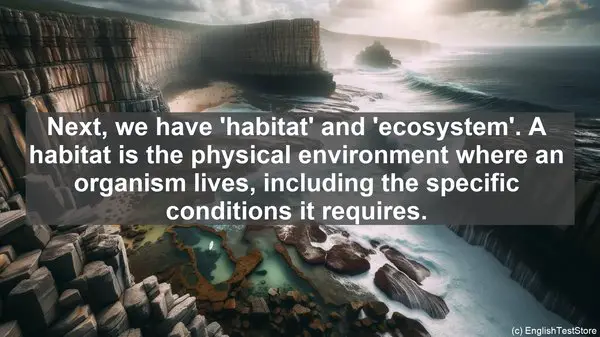
Next, we have ‘habitat’ and ‘ecosystem’. A habitat is the physical environment where an organism lives, including the specific conditions it requires. On the other hand, an ecosystem is a more comprehensive concept. It not only includes the physical environment but also the interactions between organisms and their environment. So, while a habitat is like an organism’s address, an ecosystem is like its entire neighborhood.

3. Biotic vs. Abiotic

Moving on, we have ‘biotic’ and ‘abiotic’. These terms are used to describe the components of an ecosystem. Biotic factors are the living organisms, such as plants and animals, that interact with each other. Abiotic factors, on the other hand, are the non-living components, like temperature, sunlight, and water. Both biotic and abiotic factors are crucial in shaping an ecosystem.

4. Endemic vs. Exotic

Now, let’s talk about ‘endemic’ and ‘exotic’. These words are often used when discussing species distribution. An endemic species is one that is native or restricted to a particular geographic area. It’s like a local celebrity, known only to that region. On the other hand, an exotic species is one that has been introduced to an area outside its natural range. These introductions can have significant ecological impacts.

5. Migration vs. Dispersal

The next pair, ‘migration’ and ‘dispersal’, are terms commonly used in the context of movement. Migration refers to the regular, often seasonal, movement of organisms from one place to another. It’s like a well-planned vacation. Dispersal, on the other hand, is more about the one-time movement of individuals away from their birthplace. It’s like a young adult leaving their hometown to explore new opportunities.

6. Trophic Level vs. Food Chain

When it comes to energy flow in an ecosystem, two terms often come up – ‘trophic level’ and ‘food chain’. A trophic level refers to the position an organism occupies in a food chain or web. It’s like their rank in the ecosystem’s hierarchy. A food chain, on the other hand, is a linear representation of the transfer of energy from one organism to another. It’s like a culinary journey, with each organism being a different course.

7. Density vs. Biomass

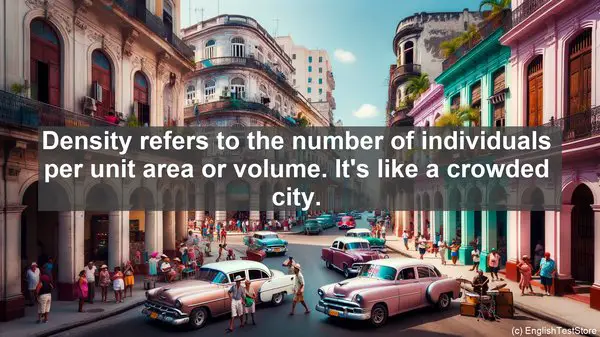
Next, we have ‘density’ and ‘biomass’. These terms are used to describe the abundance of organisms in a given area. Density refers to the number of individuals per unit area or volume. It’s like a crowded city. Biomass, on the other hand, is the total mass of all the organisms in that area. It’s like the combined weight of everyone in that city.

8. Recruitment vs. Reproduction

Now, let’s talk about ‘recruitment’ and ‘reproduction’. These terms are often used when discussing the dynamics of populations. Reproduction refers to the process of producing offspring, ensuring the continuation of a species. Recruitment, on the other hand, specifically refers to the addition of new individuals to a population, often through the survival of young organisms. It’s like a company hiring new employees to sustain its growth.

9. Overfishing vs. Overexploitation

The next pair, ‘overfishing’ and ‘overexploitation’, are terms that highlight the negative impacts of human activities on fisheries. Overfishing specifically refers to the excessive removal of fish from a population, often leading to its decline. Overexploitation, on the other hand, is a broader term that encompasses the unsustainable use of any natural resource, not just fish. Both these practices can have severe ecological and economic consequences.

10. Conservation vs. Preservation

Lastly, let’s discuss ‘conservation’ and ‘preservation’. While both these terms are related to the protection of natural resources, they have different approaches. Conservation focuses on the sustainable use of resources, ensuring their availability for future generations. It’s like managing a bank account, making withdrawals but also deposits. Preservation, on the other hand, is about protecting resources in their pristine state, often with minimal human intervention. It’s like a museum, preserving artifacts for posterity.

Top 10 Commonly Confused Words in Fish Physiology

Introduction

Welcome to today’s lesson on fish physiology. In this lesson, we will be discussing the top 10 commonly confused words in this field. Understanding these terms is crucial for a comprehensive understanding of fish biology. So, let’s dive in!

1. Osmosis vs. Diffusion

Osmosis and diffusion are both processes by which substances move across a semi-permeable membrane. However, there is a key difference. Osmosis specifically refers to the movement of water molecules, while diffusion encompasses the movement of any substance. This distinction is vital in understanding how fish regulate water and solute balance in their bodies.

2. Ectotherm vs. Endotherm

When it comes to regulating body temperature, fish fall into two categories: ectotherms and endotherms. Ectotherms, like most fish, rely on external sources of heat to maintain their body temperature. In contrast, endotherms can generate their own body heat. This differentiation is essential in comprehending the thermal adaptations of different fish species.

3. Cartilage vs. Bone

While both cartilage and bone provide structural support, they have distinct characteristics. Cartilage is more flexible and is found in areas like the fish’s gills and jaws, allowing for greater mobility. Bone, on the other hand, is more rigid and provides better protection for vital organs. Understanding these differences aids in studying the skeletal systems of fish.

4. Anadromous vs. Catadromous

Anadromous and catadromous are terms used to describe the migratory patterns of fish. Anadromous fish, such as salmon, migrate from the ocean to freshwater to spawn. Catadromous fish, like eels, do the opposite, migrating from freshwater to the ocean. Knowing these distinctions is crucial in understanding the life cycles and habitats of different fish species.

5. Gill vs. Lung

Gills and lungs are both respiratory organs, but they serve different purposes. Gills are specialized for extracting oxygen from water, while lungs are adapted for extracting oxygen from air. This differentiation is vital in comprehending the respiratory adaptations of fish living in various aquatic environments.

6. School vs. Shoal

When it comes to fish grouping, the terms school and shoal are often used interchangeably. However, there is a subtle distinction. A school refers to a tightly coordinated group of fish that move and behave as a unit. A shoal, on the other hand, is a looser aggregation of fish. Understanding these terms aids in studying fish behavior and social dynamics.

7. Herbivore vs. Omnivore

Fish, like many animals, have varied diets. Herbivores primarily feed on plant matter, while omnivores have a more diverse diet, including both plants and animals. This differentiation is crucial in understanding the ecological roles and feeding strategies of different fish species.

8. Spawning vs. Fertilization

Spawning and fertilization are two distinct stages in the reproductive process of fish. Spawning refers to the release of eggs and sperm into the water, while fertilization is the actual union of the egg and sperm, resulting in the formation of an embryo. Understanding these terms is essential in studying fish reproduction and population dynamics.

9. Scales vs. Placoid Scales

Scales are a characteristic feature of fish, but there are different types. Most fish have scales that are thin, overlapping, and flexible. However, some species, like sharks, have placoid scales, which are thicker and have a rough texture. Knowing these distinctions aids in identifying and classifying different fish species.

10. Pelagic vs. Benthic

Pelagic and benthic are terms used to describe different zones in aquatic environments. Pelagic refers to the open water, while benthic pertains to the bottom or substrate. Understanding these terms is crucial in studying the distribution and habitats of fish in various aquatic ecosystems.

Top 10 Commonly Confused Words in Fish Pathology

Introduction

Today, we are going to dive into the world of fish pathology. As you explore this fascinating field, you might come across some words that seem similar but have distinct meanings. In this lesson, we will unravel the top 10 commonly confused words in fish pathology, ensuring you have a solid understanding of each term. So, let’s get started!

1. Parasite vs. Pathogen

Parasite and pathogen are two terms often used interchangeably, but they have different implications. A parasite is an organism that lives on or in another organism, deriving nutrients from it. On the other hand, a pathogen is a microorganism, such as a virus or bacteria, that causes disease. While some parasites can be pathogens, not all pathogens are parasites. Understanding this distinction is crucial in diagnosing and treating fish diseases.

2. Infection vs. Infestation

Infection and infestation are terms used to describe the presence of harmful organisms in a host. However, they differ in the type of organism involved. Infection refers to the invasion and multiplication of microorganisms, such as bacteria or viruses, within the host’s tissues. Infestation, on the other hand, typically refers to the presence of external parasites, like lice or mites, on the host’s body. Both can have detrimental effects on fish health and require appropriate intervention.

3. Etiology vs. Pathogenesis

Etiology and pathogenesis are terms that deal with the development and progression of diseases. Etiology focuses on the study of the causes or origins of a disease. It investigates factors such as genetics, environmental conditions, or infectious agents that contribute to the disease’s occurrence. Pathogenesis, on the other hand, delves into the mechanisms by which a disease develops and progresses within an organism. Both aspects are vital in understanding and managing fish diseases effectively.

4. Symptom vs. Sign

Symptom and sign are terms used to describe the manifestations of a disease. A symptom is something that is experienced or felt by the affected individual, such as lethargy or loss of appetite. On the other hand, a sign is an objective finding that can be observed or measured, such as the presence of skin lesions or abnormal behavior. Both symptoms and signs provide valuable clues in diagnosing fish diseases, and a comprehensive evaluation considers both aspects.

5. Endemic vs. Epidemic

Endemic and epidemic are terms used to describe the prevalence of a disease in a population. Endemic refers to the constant presence of a disease within a specific geographic area or population. It is considered the baseline level of disease occurrence. Epidemic, on the other hand, refers to a sudden increase in the number of cases of a disease above the expected level. It often indicates a more widespread and severe outbreak. Monitoring the endemicity and detecting epidemics are crucial in disease surveillance and control.

6. Prophylaxis vs. Treatment

Prophylaxis and treatment are two approaches to managing fish diseases. Prophylaxis refers to preventive measures taken to minimize the occurrence or spread of diseases. This can include vaccination, quarantine, or maintaining optimal water quality. Treatment, on the other hand, involves interventions aimed at curing or alleviating the symptoms of an existing disease. Both approaches play essential roles in maintaining fish health, and a comprehensive disease management plan often incorporates elements of both.

7. Mortality vs. Morbidity

Mortality and morbidity are terms used to describe the impact of a disease on a population. Mortality refers to the number of deaths caused by a disease within a population. It is an important indicator of disease severity. Morbidity, on the other hand, refers to the number of individuals affected by a disease, irrespective of whether they die or recover. Monitoring both mortality and morbidity provides insights into the overall impact of a disease and helps in assessing its economic and ecological implications.

8. Histopathology vs. Cytology

Histopathology and cytology are two diagnostic techniques used in fish pathology. Histopathology involves the examination of tissues under a microscope to identify and characterize structural changes associated with diseases. It provides valuable insights into the nature and progression of a disease. Cytology, on the other hand, focuses on the study of individual cells. It is particularly useful in identifying infectious agents, such as bacteria or parasites, within cells. Both techniques are complementary and often used together for a comprehensive diagnosis.

9. Reservoir vs. Vector

Reservoir and vector are terms used in the context of disease transmission. A reservoir is a source or host organism in which a pathogen can persist and from which it can be transmitted to other individuals. It can be a living organism, such as an infected fish, or an environmental source, such as contaminated water. A vector, on the other hand, is an organism, often an arthropod like a mosquito or a parasite, that can transmit the pathogen from the reservoir to a susceptible host. Understanding the reservoirs and vectors involved in disease transmission is crucial in implementing effective control measures.

10. Zoonosis vs. Anthroponosis

Zoonosis and anthroponosis are terms used to describe diseases that can be transmitted between animals and humans. Zoonosis refers to diseases that primarily occur in animals but can be transmitted to humans. Examples include certain fish parasites that can infect humans if the fish is consumed raw or undercooked. Anthroponosis, on the other hand, refers to diseases that primarily occur in humans but can be transmitted to animals. Understanding these concepts is important not only for fish health but also for public health considerations.

Top 10 Commonly Confused Words in Fish Genetics

Introduction

Welcome to today’s lesson on fish genetics. In this lesson, we’ll be focusing on the top 10 commonly confused words in this field. Understanding these words is crucial for a solid foundation in fish genetics. So let’s dive in!

1. Gene vs. Allele

The terms ‘gene’ and ‘allele’ are often used interchangeably, but they have distinct meanings. A gene is a segment of DNA that determines a specific trait, while an allele is a variant of a gene. In simpler terms, a gene is the recipe, and alleles are the different ingredients that can be used.

2. Genotype vs. Phenotype

Genotype and phenotype are two fundamental concepts. Genotype refers to the genetic makeup of an organism, while phenotype is the observable characteristics. Think of genotype as the instructions, and phenotype as the end result. For example, a fish’s genotype may have the potential for vibrant colors, but the phenotype will only show those colors if the right conditions are met.

3. Homozygous vs. Heterozygous

Homozygous and heterozygous describe the presence of the same or different alleles of a gene, respectively. If both alleles are the same, it’s homozygous. If they’re different, it’s heterozygous. Homozygous individuals often exhibit the trait associated with that gene more strongly, while heterozygous individuals may have a more varied expression.

4. Dominant vs. Recessive

Dominant and recessive are terms used to describe the relationship between alleles. A dominant allele masks the presence of a recessive allele. So, if an organism has even one copy of the dominant allele, the dominant trait will be expressed. Recessive traits are only seen when an organism has two copies of the recessive allele.

5. Homologous vs. Analogous

Homologous and analogous are used to compare structures. Homologous structures have a common evolutionary origin, even if their functions may differ. Analogous structures, on the other hand, have similar functions, but their evolutionary origins are different. In fish genetics, understanding the difference between these terms is crucial for studying the evolution of different traits.

6. Inbreeding vs. Outbreeding

Inbreeding and outbreeding refer to the mating patterns within a population. Inbreeding involves mating between closely related individuals, while outbreeding involves mating between unrelated individuals. Inbreeding can lead to a higher chance of inheriting harmful traits, while outbreeding promotes genetic diversity.

7. Hybridization vs. Crossbreeding

Hybridization and crossbreeding are methods of breeding. Hybridization involves mating individuals from different species or subspecies, resulting in hybrids. Crossbreeding, on the other hand, involves mating individuals from the same species but with different traits. Both methods can lead to offspring with unique characteristics.

8. Genetic Drift vs. Gene Flow

Genetic drift and gene flow are mechanisms that affect the genetic composition of a population. Genetic drift refers to the random changes in gene frequencies over time, often seen in smaller populations. Gene flow, on the other hand, is the transfer of genes between populations through migration. Both processes play a significant role in shaping the genetic diversity of fish populations.

9. Mutation vs. Polymorphism

Mutation and polymorphism are terms related to genetic variations. A mutation is a permanent change in the DNA sequence, while polymorphism refers to the presence of multiple forms of a gene within a population. Mutations can lead to the creation of new alleles, while polymorphisms reflect the existing genetic diversity.

10. Genetic Mapping vs. Genome Sequencing

Genetic mapping and genome sequencing are techniques used in studying the genetic makeup of organisms. Genetic mapping involves identifying the location of specific genes on a chromosome, while genome sequencing is the process of determining the complete DNA sequence of an organism. Both methods provide valuable insights into the genetic characteristics of fish species.