Top 10 Commonly Confused Words in Urban Wildlife Studies

Introduction

Welcome to our lesson on the top 10 commonly confused words in urban wildlife studies. As students in this field, it’s crucial to have a solid grasp of these terms. Let’s dive in!

1. Habitat vs. Ecosystem

While both habitat and ecosystem refer to the environment in which organisms live, there’s a subtle difference. A habitat is the physical space, like a forest or a pond, while an ecosystem includes the living and non-living components, such as plants, animals, and even the air and water.

2. Endemic vs. Native

Endemic species are those found exclusively in a specific region, while native species occur naturally in an area. So, while a species can be native to a place, it may not be endemic if it’s also found elsewhere.

3. Urbanization vs. Fragmentation

Urbanization refers to the overall growth and development of cities, while fragmentation is the breaking up of natural habitats into smaller, isolated patches. Both have significant impacts on wildlife, but they’re distinct processes.

4. Invasive vs. Non-native

Non-native species are those introduced to an area, intentionally or accidentally, by human activity. Invasive species, on the other hand, not only establish themselves but also have a detrimental impact on the ecosystem, often outcompeting native species.

5. Biodiversity vs. Species Richness

Biodiversity encompasses the variety of life at all levels, including genetic, species, and ecosystem diversity. Species richness, on the other hand, specifically refers to the number of different species in a given area.

6. Nocturnal vs. Crepuscular

Nocturnal animals are active at night, while crepuscular animals are most active during twilight, at dawn or dusk. Understanding their activity patterns is crucial when studying urban wildlife behavior.

7. Trophic Level vs. Food Chain

A food chain is a linear representation of the transfer of energy and nutrients from one organism to another. Trophic levels, on the other hand, categorize organisms based on their position in the food chain, such as producers, primary consumers, and so on.

8. Adaptation vs. Acclimation

Both adaptation and acclimation refer to an organism’s response to its environment. However, adaptation is a long-term evolutionary process, while acclimation is a shorter-term physiological adjustment.

9. Territory vs. Home Range

While both territory and home range refer to an animal’s area of activity, there’s a difference in the level of defense. A territory is actively defended against intruders, while a home range is simply the area an animal uses for its activities.

10. Indicator Species vs. Keystone Species

Indicator species are those that provide insights into the overall health of an ecosystem. Keystone species, on the other hand, have a disproportionately large impact on the ecosystem, often beyond their abundance.

Top 10 Commonly Confused Words in Urban Sociology

Introduction

Welcome to our urban sociology lesson. Today, we’ll be diving into the world of commonly confused words in this field. It’s crucial to have a firm grasp on these terms to avoid any misunderstandings in your studies. So, without further ado, let’s get started!

1. Urbanization vs. Urbanism

While these words may sound similar, they have distinct meanings. Urbanization refers to the physical growth of urban areas, including the increase in population and infrastructure. On the other hand, urbanism encompasses the social, cultural, and behavioral aspects of city life. Understanding the difference between these two terms is essential to comprehending the multifaceted nature of urban sociology.

2. Gentrification vs. Revitalization

Gentrification and revitalization are often used interchangeably, but they have different implications. Gentrification refers to the process of wealthier individuals moving into a low-income neighborhood, often resulting in the displacement of the original residents. Revitalization, on the other hand, focuses on improving and renewing an area, without necessarily displacing its inhabitants. It’s crucial to recognize the nuances between these terms to have a comprehensive understanding of urban development.

3. Segregation vs. Integration

Segregation and integration represent two contrasting concepts in urban sociology. Segregation refers to the separation of different social or ethnic groups within a city, often leading to unequal access to resources. Integration, on the other hand, emphasizes the inclusion and interaction of diverse groups, promoting social cohesion. These terms are at the core of understanding urban diversity and its implications.

4. Public Space vs. Common Space

While both terms refer to areas accessible to the public, there are subtle differences. Public spaces are typically government-owned and open to all, such as parks or plazas. Common spaces, on the other hand, are often privately owned but accessible to a specific community, like a residential complex’s courtyard. Recognizing these distinctions is vital when analyzing the dynamics of urban environments.

5. Urban Planning vs. Urban Design

Urban planning and urban design are two integral aspects of shaping cities. Urban planning involves the strategic organization of land use, transportation, and infrastructure to create functional urban areas. Urban design, on the other hand, focuses on the aesthetic and spatial arrangement of the built environment. Both disciplines are crucial for creating sustainable and livable cities.

6. Megacity vs. Metropolis

While both terms refer to large urban areas, there are differences in their connotations. A megacity is characterized by its massive population, often exceeding ten million people. Metropolis, on the other hand, encompasses not only the city but also its surrounding suburbs and interconnected regions. Understanding these distinctions helps in analyzing the scale and complexity of urban systems.

7. Urban Renewal vs. Urban Regeneration

Urban renewal and urban regeneration both involve improving urban areas, but they differ in their approaches. Urban renewal often focuses on demolishing and rebuilding existing structures, while urban regeneration emphasizes a holistic approach, including social, economic, and environmental aspects. Recognizing these variations is essential when evaluating the impact of urban interventions.

8. Urban Ecology vs. Environmental Justice

Urban ecology and environmental justice are two interconnected concepts. Urban ecology explores the relationships between urban organisms and their environment, emphasizing sustainability. Environmental justice, on the other hand, focuses on the equitable distribution of environmental benefits and burdens, particularly in marginalized communities. Both concepts are vital for creating inclusive and environmentally conscious cities.

9. Urbanization vs. Suburbanization

Urbanization and suburbanization represent different patterns of population movement. Urbanization refers to the growth of cities, while suburbanization involves the expansion of residential areas outside the city center. Recognizing these trends helps in understanding the spatial dynamics and challenges of urban areas.

10. Urban Decay vs. Urban Blight

Urban decay and urban blight both describe the deterioration of urban areas, but they have different connotations. Urban decay often refers to the physical decline of buildings and infrastructure. Urban blight, on the other hand, encompasses not only the physical aspects but also the social and economic challenges faced by a neighborhood. These terms are crucial for identifying areas in need of intervention and revitalization.

Top 10 Commonly Confused Words in Urban Planning

Introduction

Today, we’re going to delve into the world of urban planning and explore some commonly confused words. Urban planning is a fascinating field, but it can be overwhelming with its extensive vocabulary. By understanding these words better, you’ll be well-equipped to navigate the complexities of urban planning.

1. Zoning vs. Planning

Zoning and planning are often used interchangeably, but they have distinct meanings. Zoning refers to the division of land into different zones, each with specific regulations. On the other hand, planning encompasses a broader scope, including land use, transportation, and infrastructure. While zoning is a part of planning, it’s not the whole picture.

2. Density vs. Intensity

Density and intensity are terms that describe the concentration of people or activities in an area. Density refers to the number of people or units per unit of land, while intensity considers the level of activity or development. A high-density area may have tall buildings, but intensity also considers factors like traffic, noise, and economic activity.

3. Urban vs. Suburban

Urban and suburban areas differ in terms of their characteristics and functions. Urban areas are typically more densely populated, with a mix of residential, commercial, and industrial activities. Suburban areas, on the other hand, are usually residential in nature, with lower population densities and a greater emphasis on single-family homes.

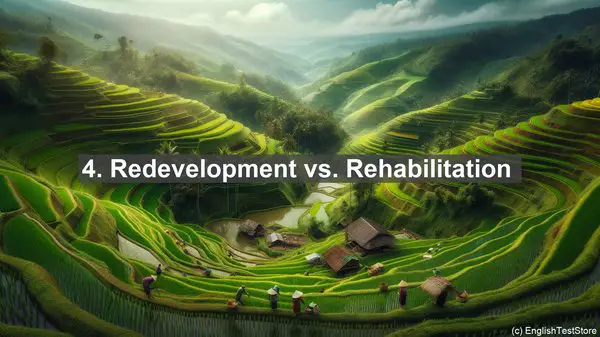
4. Redevelopment vs. Rehabilitation

Redevelopment and rehabilitation are strategies for revitalizing existing areas. Redevelopment involves demolishing and rebuilding, often with a new vision in mind. Rehabilitation, on the other hand, focuses on preserving and improving existing structures. Both approaches have their place in urban planning, depending on the context and goals.

5. Transit vs. Transportation

Transit and transportation are related but have different scopes. Transportation encompasses all modes of travel, including private vehicles, bikes, and walking. Transit, on the other hand, specifically refers to public transportation systems like buses, trains, and trams. While transportation is a broader concept, transit is often a crucial component of urban mobility.

6. Gentrification vs. Revitalization

Gentrification and revitalization both involve changes in an area, but they have different implications. Gentrification often refers to the influx of wealthier residents, leading to rising property values and the displacement of lower-income communities. Revitalization, on the other hand, focuses on improving an area’s economic, social, and physical aspects while ensuring inclusivity.

7. Greenfield vs. Brownfield

Greenfield and brownfield are terms used to describe different types of development sites. Greenfield sites are undeveloped or previously undeveloped land, often on the outskirts of urban areas. Brownfield sites, on the other hand, are previously developed areas that may have environmental contamination. Brownfield redevelopment can contribute to urban renewal and sustainability.

8. Master Plan vs. Strategic Plan

Master plans and strategic plans are both important planning documents, but they serve different purposes. A master plan provides a long-term vision for an entire city or region, covering various aspects like land use, transportation, and infrastructure. A strategic plan, on the other hand, focuses on specific goals and strategies, often for a shorter time frame or a particular issue.

9. Placemaking vs. Placekeeping

Placemaking and placekeeping are approaches to creating and maintaining vibrant, inclusive places. Placemaking involves the collaborative process of shaping public spaces to enhance their quality and functionality. Placekeeping, on the other hand, focuses on the ongoing stewardship and management of these places, ensuring they remain accessible and relevant to the community.

10. NIMBY vs. YIMBY

NIMBY and YIMBY are acronyms that represent contrasting attitudes towards development. NIMBY stands for ‘Not In My Backyard’ and often reflects resistance or opposition to new projects or changes in the neighborhood. YIMBY, on the other hand, stands for ‘Yes In My Backyard’ and represents a more supportive stance, emphasizing the need for inclusive, sustainable growth.

Top 10 Commonly Confused Words in Urban Planning and Development

Introduction

Welcome to our urban planning and development class. Today, we’re going to dive into the world of commonly confused words. While these terms may seem similar, they have distinct meanings and applications. Let’s get started!

1. Zoning vs. Planning

Zoning refers to the division of land into different use categories, such as residential, commercial, or industrial. On the other hand, planning encompasses a broader scope, including the formulation of strategies and policies for urban development.

2. Density vs. Intensity

Density refers to the number of people or units per area, while intensity relates to the level of activity or development within a given space. High density doesn’t necessarily imply high intensity, as it depends on factors like land use and infrastructure.

3. Redevelopment vs. Rehabilitation

Redevelopment involves the complete overhaul of an area, often with demolition and new construction. Rehabilitation, on the other hand, focuses on improving existing structures while preserving their historic or cultural value.

4. Transit vs. Transportation

Transit typically refers to public modes of transportation, like buses or trains, while transportation encompasses all modes, including private vehicles. Effective urban planning requires a balanced approach to both.

5. Gentrification vs. Revitalization

Gentrification refers to the process of an area becoming more affluent, often resulting in the displacement of lower-income residents. Revitalization, on the other hand, aims to improve an area’s economic and social conditions while ensuring inclusivity.

6. Greenfield vs. Brownfield

Greenfield refers to undeveloped land, often on the outskirts of a city. Brownfield, on the other hand, refers to previously developed land that may require remediation due to potential contamination.

7. Placemaking vs. Placekeeping

Placemaking involves the intentional design and activation of public spaces to create vibrant and inclusive communities. Placekeeping, on the other hand, focuses on preserving and maintaining the character and identity of existing places.

8. Eminent Domain vs. Condemnation

Eminent domain is the government’s power to acquire private property for public use, often with compensation to the owner. Condemnation, on the other hand, refers to the legal process of declaring a property unfit for use due to safety or health concerns.

9. Infill vs. Sprawl

Infill refers to the development of vacant or underutilized land within existing urban areas. Sprawl, on the other hand, describes the uncontrolled expansion of development, often leading to issues like traffic congestion and loss of green spaces.

10. Master Plan vs. Strategic Plan

A master plan provides a comprehensive vision and framework for future development, often at a city or regional scale. A strategic plan, on the other hand, focuses on specific goals and actions to achieve them, often for a shorter time frame.

Top 10 Commonly Confused Words in Urban Forestry

Introduction: The Importance of Language in Urban Forestry

Welcome to today’s lesson on urban forestry. Did you know that the words we use in this field can have a significant impact on our work? In this lesson, we’ll explore the top 10 commonly confused words in urban forestry, ensuring that you have a solid grasp of their meanings.

1. Tree vs. Shrub: Understanding the Difference

One of the most fundamental distinctions in urban forestry is the difference between a tree and a shrub. While both are woody plants, trees generally have a single main stem, while shrubs have multiple stems. Understanding this difference is crucial when it comes to planting, pruning, and managing these vegetation types.

2. Deciduous vs. Evergreen: Knowing the Leaf Patterns

Deciduous and evergreen are terms often used to describe trees. Deciduous trees shed their leaves in the fall, while evergreen trees retain their foliage year-round. This distinction affects not only the aesthetics of an urban landscape but also its ecological functions, such as providing shade or windbreaks.

3. Native vs. Non-Native: Considering Biodiversity

When selecting trees for an urban environment, it’s essential to consider whether they are native or non-native. Native trees are those that naturally occur in a particular region, while non-native trees are introduced from elsewhere. Native trees often have better adaptability to local conditions and can support local wildlife, contributing to a more biodiverse urban ecosystem.

4. Pruning vs. Trimming: Understanding the Techniques

Pruning and trimming are two common techniques used to maintain tree health and shape. Pruning typically involves the selective removal of branches to improve structure, while trimming focuses on removing overgrown or unwanted foliage. Both techniques require precision and knowledge of tree biology to ensure optimal results.

5. Arborist vs. Forester: Roles and Responsibilities

While both arborists and foresters work with trees, their roles and responsibilities differ. Arborists are primarily concerned with the care and maintenance of individual trees, often in an urban setting. Foresters, on the other hand, manage larger forested areas, focusing on ecological balance and timber production. Understanding these distinctions can help you choose the right professional for a specific task.

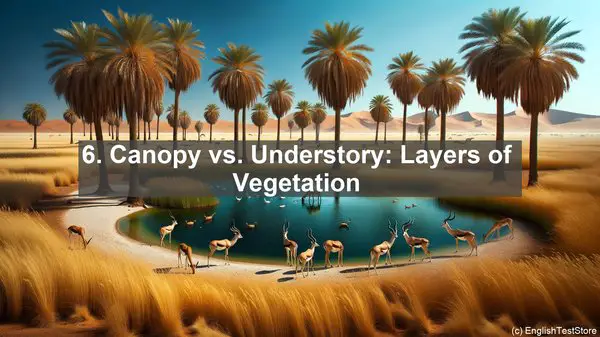
6. Canopy vs. Understory: Layers of Vegetation

In urban forestry, we often refer to the canopy and understory. The canopy is the upper layer of vegetation, usually composed of taller trees, while the understory consists of smaller plants, such as shrubs or herbaceous species. Each layer plays a vital role in the overall ecosystem, from providing habitat to filtering air and water.

7. Transplanting vs. Replanting: Moving Trees with Care

Transplanting and replanting are techniques used when trees need to be moved from one location to another. Transplanting involves carefully uprooting a tree and moving it, while replanting refers to the process of establishing a tree in a new location. Both techniques require careful planning and consideration of factors like soil conditions and root health.

8. Urban Forest vs. Urban Jungle: Striving for Balance

The term ‘urban forest’ refers to the collection of trees and other vegetation in an urban area. It’s a vital component of a healthy city, providing numerous benefits, from reducing air pollution to enhancing mental well-being. However, without proper planning and management, an urban forest can turn into an ‘urban jungle,’ where trees and vegetation become overgrown and pose safety risks.

9. Drought-Tolerant vs. Drought-Resistant: Adapting to Climate Challenges

With climate change, water availability is becoming increasingly important in urban forestry. Drought-tolerant plants are those that can withstand dry conditions, while drought-resistant plants are those that can survive with minimal water. Choosing the right species for a particular area’s climate is crucial for long-term sustainability.

10. Mulching vs. Composting: Managing Organic Matter

Mulching and composting are two methods of managing organic matter in urban forestry. Mulching involves placing a layer of organic material, such as wood chips, around a tree’s base, providing numerous benefits, including moisture retention and weed suppression. Composting, on the other hand, is the controlled decomposition of organic waste, resulting in nutrient-rich material that can be used as a soil amendment.

Top 10 Commonly Confused Words in Urban Economics

Introduction

Hello everyone, and welcome to today’s lesson. Urban economics can be a complex subject, and one aspect that often trips up students is the multitude of similar-sounding words. In this lesson, we’ll be exploring the top 10 commonly confused words in urban economics, clarifying their meanings and usage. So, let’s dive right in!

1. Urbanization vs. Suburbanization

Urbanization refers to the process of an area becoming more urban, with an increasing population and infrastructure. On the other hand, suburbanization is the movement of people, businesses, and activities from the city center to the outskirts or suburbs. While both involve changes in the urban landscape, they are distinct phenomena.

2. Gentrification vs. Revitalization

Gentrification is the transformation of a neighborhood, often involving the influx of wealthier residents and businesses, leading to rising property values. Revitalization, on the other hand, refers to the efforts to improve and renew an area, often through infrastructure upgrades and community initiatives. While gentrification can be a part of revitalization, the two terms aren’t interchangeable.

3. Public Goods vs. Common Pool Resources

Public goods are non-excludable and non-rivalrous, meaning they are available to all and one person’s use doesn’t diminish its availability to others. Examples include parks and street lighting. Common pool resources, on the other hand, are rivalrous, meaning their use by one person reduces their availability to others. Fisheries and grazing lands are examples. While both involve shared resources, their characteristics differ.

4. Agglomeration vs. Congestion

Agglomeration refers to the concentration of economic activities in a particular area, often resulting in productivity gains and knowledge spillovers. Congestion, on the other hand, is the overcrowding and resulting inefficiencies, often seen in transportation networks. While both involve the clustering of activities, their implications are different.

5. Externality vs. Spillover

Externality refers to the impact of an economic activity on a third party, which is not accounted for in the market transaction. For example, pollution from a factory affecting the health of nearby residents. Spillover, on the other hand, is the transfer of knowledge or benefits from one entity to another. While both involve the transfer of effects, their nature and context differ.

6. Zoning vs. Land Use Planning

Zoning is the division of land into different zones or areas, specifying the allowable uses and regulations for each. Land use planning, on the other hand, is a broader process that considers various factors, such as transportation and environmental impact, in determining the best use of land. While zoning is a tool used in land use planning, the two terms aren’t synonymous.

7. Inequality vs. Segregation

Inequality refers to the unequal distribution of resources or opportunities among individuals or groups. Segregation, on the other hand, is the physical or social separation of different groups, often along racial or economic lines. While both involve disparities, their manifestations and causes can vary.

8. Brownfield vs. Greenfield

Brownfield refers to previously developed land that may be contaminated or underutilized, often requiring remediation. Greenfield, on the other hand, is undeveloped land, often in its natural state. When it comes to development, the considerations and challenges for brownfield and greenfield sites can be distinct.

9. Transit-Oriented Development vs. Auto-Oriented Development

Transit-oriented development (TOD) is an urban planning approach that focuses on creating compact, mixed-use communities around public transportation hubs, promoting walkability and reducing reliance on cars. Auto-oriented development, as the name suggests, prioritizes car use and often results in sprawling, car-dependent areas. While both involve development, their approaches and outcomes differ.

10. Elasticity vs. Inelasticity

Elasticity refers to the responsiveness of demand or supply to changes in price or other factors. If a small change in price leads to a large change in quantity demanded or supplied, it’s considered elastic. Inelasticity, on the other hand, means that quantity doesn’t change significantly in response to price changes. Understanding elasticity is crucial in analyzing market dynamics.

Top 10 Commonly Confused Words in Urban Ecology

Introduction

Welcome to today’s lesson on urban ecology. In this lesson, we’ll be discussing the top 10 commonly confused words in this field. Understanding these words is crucial for a comprehensive grasp of urban ecology. So, let’s dive in!

1. Urbanization vs. Urbanism

Often used interchangeably, these terms have distinct meanings. Urbanization refers to the physical expansion of urban areas, while urbanism encompasses the social, cultural, and behavioral aspects of city life. Understanding the difference is vital for analyzing urban development comprehensively.

2. Biodiversity vs. Species Richness

While related, these terms have nuanced differences. Biodiversity refers to the variety of life in an ecosystem, including genetic, species, and ecosystem diversity. Species richness, on the other hand, focuses solely on the number of different species present. Both are important indicators of ecological health.

3. Green Space vs. Open Space

Though often used interchangeably, these terms have different connotations. Green space refers to areas with vegetation, such as parks or gardens, while open space encompasses any undeveloped land, including natural or recreational areas. Understanding the distinction helps in urban planning and conservation efforts.

4. Ecological Footprint vs. Carbon Footprint

While both terms relate to environmental impact, they measure different aspects. Ecological footprint assesses the overall resources a person or population consumes, including land, water, and energy. Carbon footprint, on the other hand, specifically measures the amount of greenhouse gases emitted, primarily carbon dioxide. Both are crucial for sustainability analysis.

5. Urban Heat Island vs. Global Warming

Often confused, these terms have different scopes. Urban heat island refers to the localized heating of urban areas, resulting in higher temperatures compared to surrounding rural areas. Global warming, on the other hand, is the long-term increase in Earth’s average temperature due to greenhouse gas emissions. While related, they have distinct causes and implications.

6. Invasive Species vs. Non-Native Species

Though similar, these terms have subtle differences. Invasive species are non-native organisms that cause harm to the environment, economy, or human health. Non-native species, on the other hand, simply refer to species that are not naturally found in a particular area. Understanding the distinction is crucial for managing ecological balance.

7. Urban Agriculture vs. Vertical Farming

Both terms relate to urban food production, but they differ in approach. Urban agriculture encompasses various forms of growing food in cities, including community gardens or rooftop farms. Vertical farming, however, specifically refers to the practice of cultivating crops in vertically stacked layers, often indoors. Both have potential in enhancing urban food security.

8. Stormwater vs. Wastewater

While both terms refer to water, they have different sources and characteristics. Stormwater is precipitation that flows over surfaces, potentially carrying pollutants. Wastewater, on the other hand, is any water that has been used, including from households or industries. Proper management of both is crucial for water conservation and pollution prevention.

9. Urban Sprawl vs. Compact City

These terms describe contrasting patterns of urban development. Urban sprawl refers to the unrestricted, low-density expansion of cities into surrounding areas. A compact city, on the other hand, emphasizes high-density, mixed-use development within existing urban areas. The choice between the two has significant implications for resource consumption and quality of life.

10. Resilience vs. Sustainability

While related, these terms have distinct focuses. Resilience refers to the ability of a system to withstand and recover from disturbances, such as natural disasters. Sustainability, on the other hand, encompasses long-term environmental, social, and economic balance. Both are crucial concepts in urban planning and management.

Top 10 Commonly Confused Words in Urban Design

Introduction

Urban design is a fascinating field, but it can also be quite confusing. In this lesson, we’ll explore the top 10 commonly confused words in urban design. By the end, you’ll have a clearer understanding of these terms, which will greatly benefit your studies and future career. So, let’s dive in!

1. Zoning vs. Planning

Zoning and planning are often used interchangeably, but they have distinct meanings. Zoning refers to the division of land into different areas for specific uses, such as residential, commercial, or industrial. On the other hand, planning involves the strategic organization and development of a city, considering various factors like transportation, infrastructure, and community needs. While zoning is a part of planning, the two terms shouldn’t be used interchangeably.

2. Density vs. Intensity

Density and intensity are terms that refer to the concentration of buildings or activities in a given area. Density typically relates to the number of buildings or people in a specific space, while intensity refers to the level of activity or land use intensity. For example, a high-density area may have many buildings, while a high-intensity area may have a mix of residential, commercial, and recreational activities. Understanding the difference between these terms is crucial when analyzing urban spaces.

3. Facade vs. Frontage

In urban design, the facade and frontage of a building are often mentioned. The facade refers to the exterior face or wall of a building, which can be highly decorative and visually appealing. On the other hand, frontage refers to the part of a building that faces a street or public space. It includes not only the facade but also elements like entrances, windows, and sidewalks. Both facade and frontage contribute to the overall character and functionality of a building.

4. Placemaking vs. Placekeeping

Placemaking and placekeeping are concepts that revolve around the creation and maintenance of vibrant, livable spaces. Placemaking involves the intentional design and activation of a place, often through community involvement and the incorporation of cultural elements. Placekeeping, on the other hand, focuses on the long-term management and preservation of a place’s qualities, ensuring its continued success. Both concepts are essential for creating sustainable and thriving urban environments.
5. Transit-Oriented Development vs. Transit-Adjacent Development

Transit-oriented development (TOD) and transit-adjacent development (TAD) are terms used to describe urban development in relation to public transportation. TOD refers to the planning and design of communities around transit stations, with the aim of promoting walking, cycling, and the use of public transport. TAD, on the other hand, refers to development near transit, but without the same emphasis on walkability and transit accessibility. Understanding these terms is crucial when considering the impact of transportation on urban areas.

6. Gentrification vs. Revitalization

Gentrification and revitalization are often discussed in the context of urban neighborhoods. Gentrification refers to the process of wealthier individuals or groups moving into a lower-income area, often leading to increased property values and changes in the neighborhood’s character. Revitalization, on the other hand, focuses on the improvement and renewal of a neighborhood, often through community-led initiatives and investment. While both concepts involve change, they have different implications for the existing residents and social dynamics of a place.

7. Greenfield vs. Brownfield

When it comes to land development, the terms greenfield and brownfield are commonly used. Greenfield refers to undeveloped land, often in rural or suburban areas, that hasn’t been previously used for urban purposes. Brownfield, on the other hand, refers to land that has been previously developed, usually for industrial or commercial activities, and may require remediation before redevelopment. Understanding these terms is crucial when considering the environmental and social impact of new development.

8. Public Space vs. Open Space

Public space and open space are terms that refer to different types of accessible areas in a city. Public space includes streets, plazas, and parks that are open to the public, regardless of ownership. Open space, on the other hand, refers to areas that are primarily undeveloped, such as forests, wetlands, or agricultural land. Both types of spaces are essential for a well-balanced and livable city, providing opportunities for recreation, social interaction, and ecological benefits.

9. Streetscape vs. Roadway

In urban design, the terms streetscape and roadway are often used when discussing the design and function of streets. Streetscape refers to the visual and aesthetic elements of a street, including sidewalks, landscaping, lighting, and street furniture. Roadway, on the other hand, refers to the physical infrastructure for vehicular movement, including lanes, intersections, and signage. Both streetscape and roadway contribute to the overall experience and safety of a street.

10. Master Plan vs. Strategic Plan

Master plans and strategic plans are important tools for guiding the future development of a city. A master plan is a comprehensive, long-term vision for the physical development of a city, considering various aspects like land use, transportation, and infrastructure. A strategic plan, on the other hand, focuses on specific goals and actions, often for a shorter time frame, to address immediate challenges or opportunities. Both types of plans are crucial for the organized and sustainable growth of a city.
Top 10 Commonly Confused Words in Urban Anthropology

Introduction

Welcome to our urban anthropology class. Today, we’ll be discussing a topic that often trips up even the most seasoned scholars – commonly confused words. Let’s dive in!

1. Urbanization vs. Urbanism

While both terms revolve around cities, they have distinct meanings. Urbanization refers to the physical growth of urban areas, whereas urbanism encompasses the social, cultural, and behavioral aspects of city life.

2. Gentrification vs. Revitalization

Gentrification often implies the displacement of lower-income residents due to rising property values, while revitalization focuses on improving an area without displacing its existing community.

3. Ethnicity vs. Race

While related, these terms differ. Ethnicity refers to shared cultural practices and heritage, while race is based on physical characteristics. It’s important to note that race is a social construct.

4. Cultural Relativism vs. Ethnocentrism

Cultural relativism emphasizes understanding a culture within its own context, without judgment. Ethnocentrism, on the other hand, involves evaluating other cultures based on one’s own cultural norms.

5. Assimilation vs. Acculturation

Assimilation implies adopting the dominant culture, often at the expense of one’s own, while acculturation involves a more reciprocal exchange of cultural traits between groups.

6. Subculture vs. Counterculture

A subculture is a distinct group within a larger culture, while a counterculture actively opposes the dominant culture’s values and norms.

7. Emic vs. Etic

Emic refers to an insider’s perspective, understanding a culture from within. Etic, on the other hand, involves an outsider’s perspective, analyzing a culture from an objective standpoint.

8. Qualitative vs. Quantitative

Qualitative research focuses on in-depth understanding, often through interviews and observations, while quantitative research involves numerical data and statistical analysis.

9. Agency vs. Structure

Agency emphasizes individual or group actions and choices, while structure refers to the larger social, political, and economic systems that shape those actions and choices.

10. Material Culture vs. Non-Material Culture

Material culture encompasses physical artifacts, such as tools and clothing, while non-material culture includes beliefs, values, and norms.

Top 10 Commonly Confused Words in Urban and Regional Planning

Introduction

Today, we delve into the world of urban and regional planning. While this field offers exciting opportunities, it also presents some linguistic challenges. In this lesson, we’ll explore the top 10 commonly confused words in this domain. So, let’s get started!

1. Zoning vs. Planning

Often used interchangeably, zoning and planning have distinct meanings. Zoning refers to the division of land into different zones for specific uses, like residential or commercial. Planning, on the other hand, is a broader process that encompasses various aspects, such as transportation, infrastructure, and community development.

2. Density vs. Intensity

While both terms relate to the concentration of people or activities in an area, they differ in scope. Density refers to the number of people or units per unit of land, like residents per square kilometer. Intensity, on the other hand, considers the level of activity or development, such as the number of jobs or businesses in an area.

3. Urban vs. Suburban

Urban and suburban areas differ in terms of their characteristics and functions. Urban areas are typically more densely populated, have a higher concentration of commercial activities, and offer diverse services. Suburban areas, on the other hand, are often residential in nature, with a lower population density and a more spread-out layout.

4. Redevelopment vs. Rehabilitation

While both terms involve improving or revitalizing existing structures or areas, they have different implications. Redevelopment usually entails a more comprehensive transformation, often involving demolishing and rebuilding. Rehabilitation, on the other hand, focuses on preserving and enhancing the existing structures, often for historical or cultural reasons.

5. Master Plan vs. Strategic Plan

Both master plans and strategic plans are crucial in guiding the development of an area. A master plan provides a long-term vision, outlining the physical layout, land use, and infrastructure. A strategic plan, on the other hand, focuses on the goals, priorities, and actions needed to achieve specific outcomes, often considering economic, social, and environmental factors.

6. Transit vs. Transportation

While transportation encompasses all modes of movement, including private vehicles, transit specifically refers to public transportation systems, like buses, trains, or trams. Transit planning involves designing and managing these systems to ensure efficient and accessible mobility for the public.

7. Brownfield vs. Greenfield

When it comes to land development, brownfield and greenfield sites are distinct. Brownfield sites are previously developed areas that may have been contaminated and require remediation. Greenfield sites, on the other hand, are undeveloped or largely untouched, often located on the outskirts of urban areas.

8. Comprehensive Plan vs. Specific Plan

In urban planning, different types of plans serve specific purposes. A comprehensive plan, also known as a general plan, provides an overarching framework for a jurisdiction’s development. A specific plan, on the other hand, zooms in on a particular area or project, offering more detailed guidelines and regulations.

9. Gentrification vs. Revitalization

While both terms involve the improvement or transformation of an area, they have different connotations. Gentrification often refers to the influx of wealthier residents, resulting in increased property values and potential displacement of existing communities. Revitalization, on the other hand, focuses on enhancing an area’s economic, social, or physical aspects while ensuring the inclusivity and well-being of all residents.

10. Land Use vs. Zoning

Land use and zoning are closely related but not synonymous. Land use refers to the activities or functions taking place on a particular piece of land, like residential, commercial, or industrial. Zoning, as mentioned earlier, is the regulatory framework that designates specific areas for these different uses, ensuring compatibility and managing potential conflicts.