
Introduction
Today, we’ll be diving into the world of global environmental change. While this field is fascinating, it can also be quite complex, especially when it comes to the terminology. In this lesson, we’ll be focusing on the top 10 words that are commonly confused. By the end, you’ll have a solid grasp on these terms, enabling you to navigate the subject with ease. So, let’s get started!
1. Weather vs. Climate
One of the most fundamental distinctions in this field is between weather and climate. Weather refers to the short-term atmospheric conditions, such as temperature and precipitation, in a specific area. On the other hand, climate encompasses the long-term patterns and averages of these conditions. While weather can change within hours, climate is measured over decades or even centuries.
2. Adaptation vs. Mitigation
When it comes to addressing the impacts of global environmental change, two strategies often come up: adaptation and mitigation. Adaptation involves adjusting to the changes that are already occurring. For example, building sea walls to protect against rising sea levels. Mitigation, on the other hand, focuses on reducing the causes of change. This can include actions like transitioning to renewable energy sources to curb greenhouse gas emissions.
3. Renewable vs. Non-renewable
In the context of energy, it’s crucial to understand the difference between renewable and non-renewable sources. Renewable energy comes from resources that are naturally replenished, such as sunlight and wind. Non-renewable energy, on the other hand, is derived from sources that are finite, like fossil fuels. The shift towards renewable sources is essential for a sustainable future.

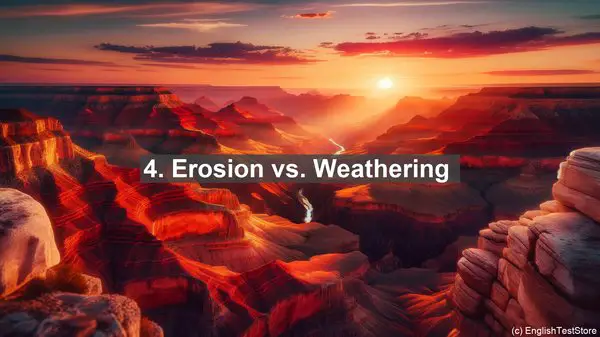
4. Erosion vs. Weathering
While erosion and weathering both involve the breakdown of rocks, they are distinct processes. Weathering refers to the physical or chemical breakdown of rocks in situ, meaning they stay in the same place. Erosion, on the other hand, involves the transport of these weathered materials, often by wind or water. In short, weathering is the initial breakdown, while erosion is the subsequent movement.
5. Biodiversity vs. Species Richness
Biodiversity and species richness are related concepts, but they have different scopes. Biodiversity encompasses the variety of life at all levels, from genes to ecosystems. It includes not just the number of species, but also their interactions and habitats. Species richness, on the other hand, specifically refers to the number of different species in a given area.
6. Greenhouse Effect vs. Global Warming
The greenhouse effect and global warming are often used interchangeably, but they refer to different aspects of climate change. The greenhouse effect is a natural process where certain gases in the atmosphere trap heat, keeping the Earth warm. Global warming, on the other hand, specifically refers to the increase in the Earth’s average temperature due to human activities, which intensifies the greenhouse effect.
7. Extinction vs. Endangerment
When it comes to the loss of species, extinction and endangerment are two key terms. Extinction refers to the complete disappearance of a species from the Earth. Endangerment, on the other hand, indicates that a species is at risk of becoming extinct. It’s important to take action to prevent both scenarios, as each loss can have far-reaching ecological consequences.
8. Deforestation vs. Desertification
Deforestation and desertification are both concerning processes related to land degradation. Deforestation specifically refers to the clearing of forests, often for agricultural purposes. Desertification, on the other hand, is the expansion of arid or semi-arid areas, often due to factors like climate change and unsustainable land use. Both processes can have severe impacts on ecosystems and communities.
9. Carbon Footprint vs. Ecological Footprint
Carbon footprint and ecological footprint are measures of human impact, but they focus on different aspects. Carbon footprint specifically quantifies the amount of greenhouse gas emissions, usually in terms of carbon dioxide, that an individual, organization, or activity is responsible for. Ecological footprint, on the other hand, is a broader measure that considers the overall resources used and waste generated.
10. Resilience vs. Sustainability
Resilience and sustainability are both important concepts in the context of global environmental change. Resilience refers to the ability of a system, whether it’s an ecosystem or a community, to withstand and recover from disturbances. Sustainability, on the other hand, involves meeting the needs of the present without compromising the ability of future generations to meet their own needs. Both concepts are crucial for a thriving and balanced planet.