Top 10 Verbs for Talking About Photography Techniques and Visual Storytelling

1. Capture

The first verb on our list is ‘capture.’ It goes beyond simply taking a photo. When you capture an image, you’re preserving a moment, an emotion, or a story within a frame. It’s about freezing time and encapsulating the essence of a subject.

2. Frame

Framing is all about composition. It’s about consciously placing elements within the frame to create a visually appealing and balanced image. By using different angles, lines, and shapes, you can guide the viewer’s eye and convey a specific message.

3. Illuminate

Light is the essence of photography. When you illuminate a subject, you’re not just making it visible. You’re sculpting it, adding depth, and creating a mood. The way you manipulate light can completely transform the look and feel of an image.

4. Focus

Focus is about directing the viewer’s attention. It’s not just about what’s sharp; it’s also about what’s intentionally blurred. By controlling the depth of field, you can isolate a subject, create a sense of depth, or emphasize a particular detail.

5. Complement

In photography, elements should work together harmoniously. When you complement one element with another, you’re creating a visual relationship. It could be through color, shape, or texture. This harmony adds depth and interest to the image.

6. Evoke

Photography is a powerful medium for evoking emotions. When you evoke a feeling through an image, you’re not just showing it; you’re making the viewer experience it. It could be joy, sadness, wonder, or any other emotion you want to convey.

7. Juxtapose

Juxtaposition is about placing contrasting elements side by side. It creates tension, intrigue, and often tells a story. By juxtaposing, you can highlight differences, create a visual metaphor, or challenge the viewer’s perception.

8. Enhance

Enhancement is about taking an image from good to great. It’s the post-processing stage where you fine-tune the colors, contrast, and other aspects. But it’s not just about making it look better; it’s about enhancing the story and the mood.

9. Convey

Photography is a language, and every image tells a story. When you convey a message through a photo, you’re using visual elements to communicate. It could be a simple idea or a complex narrative, but the goal is to make the viewer understand and connect.


Top 10 Verbs for Talking About Personal Health and Fitness Goals

Introduction

Today, we’re going to explore the world of personal health and fitness goals. To effectively communicate your aspirations and achievements, it’s essential to have a strong vocabulary. In this lesson, we’ll focus on the top 10 verbs that will empower you to express yourself fluently. Let’s get started!

1. Set

The first verb on our list is ‘set.’ When it comes to goals, setting them is the initial step. Whether it’s a short-term objective like running a mile or a long-term goal like losing weight, ‘set’ is the verb to use. For example, ‘I’ve set a goal to exercise five times a week.’

2. Achieve

Next up, we have ‘achieve.’ This verb signifies reaching a goal or target. It’s a moment of accomplishment. For instance, ‘After months of hard work, I finally achieved my desired weight.’

3. Improve

Improvement is a constant journey in health and fitness. That’s where ‘improve’ comes in. It denotes making progress or getting better. You can say, ‘I’m continuously working to improve my flexibility.’

4. Maintain

Once you’ve achieved a certain level of fitness, ‘maintain’ becomes crucial. It means to keep up or sustain. For example, ‘I’ve reached my ideal weight, and now I’m focused on maintaining it.’

5. Incorporate

To diversify your fitness routine or include new habits, ‘incorporate’ is the verb to use. It suggests adding something. For instance, ‘I’m planning to incorporate yoga into my daily schedule.’

6. Monitor

Tracking your progress is essential. That’s where ‘monitor’ comes in. It means to observe or keep an eye on. You can say, ‘I use a fitness app to monitor my daily steps.’

7. Adjust

Sometimes, you need to make changes to your fitness plan. That’s when ‘adjust’ becomes handy. It denotes modifying or adapting. For example, ‘After consulting my trainer, I decided to adjust my workout routine.’

8. Challenge

To push yourself beyond your limits or take on something difficult, ‘challenge’ is the verb to use. It suggests testing your abilities. You can say, ‘I’m always looking for new challenges to enhance my fitness level.’

9. Commit

Commitment is crucial in achieving any health or fitness goal. ‘Commit’ means to dedicate or pledge. For instance, ‘I’ve committed to a daily meditation practice for mental well-being.’

10. Inspire

Lastly, ‘inspire’ is a verb that signifies motivating or encouraging others. It’s about being a source of inspiration. For example, ‘I hope my fitness journey can inspire others to prioritize their health.’

Top 10 Verbs for Talking About Personal Branding and Online Presence

Introduction: The Power of Verbs in Communication

Today, we’re diving into the world of personal branding and online presence. While nouns and adjectives are important, it’s the verbs that truly drive action and engagement. So, let’s get started!

1. Create: Building Your Digital Identity

Creating content is at the heart of personal branding. Whether it’s a blog post, a lesson, or a social media update, each piece you create shapes your online presence.

2. Curate: Selecting the Best

In the vast sea of information, curating is key. By carefully selecting and sharing valuable content, you position yourself as a trusted source in your field.

3. Engage: Building Relationships

Engagement is more than just likes and comments. It’s about actively participating in conversations, responding to queries, and fostering a sense of community.

4. Optimize: Maximizing Visibility

With the right optimization techniques, you can ensure your content reaches the right audience. From SEO to hashtags, every element plays a role.

5. Network: Expanding Connections

Networking isn’t just for in-person events. Online platforms offer countless opportunities to connect with like-minded individuals and industry experts.

6. Personalize: Adding Your Touch

In a digital world, personalization sets you apart. Whether it’s a tailored message or a customized design, adding your touch creates a memorable experience.

7. Analyze: Measuring Success

Data is a goldmine when it comes to online presence. By analyzing metrics, you can understand what’s working, what’s not, and make informed decisions.

8. Adapt: Embracing Change

The digital landscape is ever-evolving. Being adaptable and open to new platforms, trends, and strategies is crucial for long-term success.

9. Collaborate: Leveraging Collective Strength

Collaboration amplifies your reach. By partnering with others, you not only tap into their audience but also benefit from diverse perspectives and expertise.

10. Reflect: Continuous Growth

Finally, personal branding is a journey. Taking time to reflect, learn from experiences, and refine your strategies is what ensures constant growth.

Top 10 Verbs for Talking About Personal and Corporate Branding

Introduction: The Power of Verbs in Branding

Welcome to today’s lesson. When it comes to branding, the right choice of words can make all the difference. Verbs, in particular, are incredibly powerful. They convey action, energy, and impact. Today, we’ll dive into the top 10 verbs that every student and professional should be familiar with when discussing personal and corporate branding.

1. Define: Establishing the Foundation

To build a strong brand, you first need to define it. This involves clarifying your values, mission, and unique selling points. By defining your brand, you create a solid foundation that guides all your future branding efforts.

2. Differentiate: Standing Out from the Crowd

In a competitive market, differentiation is key. You want your brand to stand out, to be distinct. This could be through your product, your messaging, or even your visual identity. By differentiating yourself, you create a memorable and recognizable brand.

3. Communicate: Conveying Your Message

A brand is only as strong as its message. You can have a great product, but if you can’t effectively communicate its value, it won’t resonate with your audience. Communication involves not just what you say, but also how you say it, and where you say it.

4. Engage: Building a Community

Brands today are all about building relationships. It’s not just about selling a product; it’s about creating a community of loyal customers. Engagement is about fostering that connection, whether through social media, events, or personalized interactions.

5. Adapt: Staying Relevant in a Changing World

The business landscape is constantly evolving. To thrive, brands need to adapt. This could mean embracing new technologies, responding to market trends, or even revisiting your brand strategy. The ability to adapt ensures your brand remains relevant and future-proof.

6. Innovate: Pushing Boundaries

Innovation is at the heart of successful brands. It’s about constantly pushing the boundaries, finding new solutions, and challenging the status quo. By being innovative, you not only stay ahead of the competition but also position your brand as a thought leader.

7. Collaborate: Harnessing the Power of Partnerships

In today’s interconnected world, collaboration is key. By partnering with like-minded brands or influencers, you can tap into new audiences, share resources, and even co-create. Collaboration is a win-win strategy for brand growth.

8. Monitor: Keeping a Finger on the Pulse

Branding is not a one-time task; it’s an ongoing process. Monitoring involves tracking metrics, analyzing data, and staying updated on industry trends. By monitoring your brand’s performance, you can make informed decisions and course-correct if needed.

9. Evolve: Embracing Continuous Improvement

A brand that remains stagnant is a brand that’s likely to fade away. Evolution is about constantly seeking ways to improve, whether it’s through product enhancements, customer experience upgrades, or even rebranding. By evolving, you ensure your brand’s longevity.

10. Inspire: Creating a Lasting Impression

Finally, a great brand is one that inspires. It’s not just about the product or service; it’s about the emotions and aspirations it evokes. By inspiring your audience, you create a lasting impression, one that goes beyond a transaction and becomes a relationship.

Top 10 Verbs for Talking About Online Education and Virtual Classrooms

1. Access

One of the key advantages of online education is the ability to access course materials and resources from anywhere, at any time. With just a few clicks, students can access lectures, readings, and assignments.

2. Collaborate

In a virtual classroom, collaboration takes on a whole new meaning. Students can collaborate with their peers, even if they’re miles apart. From group projects to online discussions, collaboration is at the heart of online learning.

3. Engage

Engagement is crucial in an online setting. Students can engage with the course content through interactive modules, lessons, and quizzes. They can also engage with their instructors and classmates through online forums and chats.

4. Submit

Gone are the days of handing in physical assignments. In the virtual world, students submit their work electronically. This not only saves time but also allows for quick feedback and grading.

5. Monitor

Instructors can easily monitor student progress in an online course. They can track participation, view assignment submissions, and identify areas where students may need additional support.

6. Customize

Online education offers a level of customization that traditional classrooms may not. Students can often choose the pace at which they learn, access additional resources, and tailor their learning experience to their needs.

7. Demonstrate

Whether it’s a coding project or a presentation, students often need to demonstrate their understanding of a concept. In the virtual classroom, this can be done through lesson submissions, online quizzes, or even live presentations.

8. Navigate

The online learning environment can sometimes be overwhelming. However, with the right tools and guidance, students can navigate through course modules, discussion boards, and other resources with ease.

9. Evaluate

Assessing student performance is an essential part of education. In the virtual setting, instructors can evaluate students through various means, such as online exams, project evaluations, and peer assessments.

Top 10 Verbs for Talking About Online Community Building and Management

Introduction

Welcome to today’s lesson. In the digital age, online communities have become an integral part of our lives. Whether it’s a social media group, an online forum, or a professional network, the success of these communities depends on effective management. And that’s where our top 10 verbs come in. Let’s dive in!

1. Engage

Engagement is the lifeblood of any online community. It’s about actively participating, responding to comments, and starting conversations. By engaging with your community, you foster a sense of belonging and encourage others to do the same.

2. Moderate

Moderation is crucial to maintain a healthy and respectful environment. It involves monitoring discussions, removing spam or offensive content, and ensuring the community guidelines are followed. A well-moderated community is a safe space for everyone.

3. Facilitate

As a community manager, your role is not just about enforcing rules. It’s also about facilitating meaningful interactions. This includes organizing events, starting discussions on relevant topics, and connecting members with similar interests.

4. Analyze

Data is a goldmine when it comes to community management. By analyzing metrics like engagement rates, active members, and popular topics, you can gain insights into what’s working and what needs improvement. This data-driven approach is key to success.

5. Collaborate

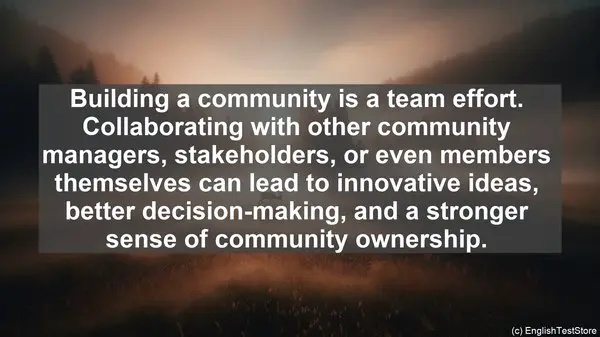
Building a community is a team effort. Collaborating with other community managers, stakeholders, or even members themselves can lead to innovative ideas, better decision-making, and a stronger sense of community ownership.

6. Educate

Communities are not just about discussions. They’re also about learning. As a community manager, you can curate and share valuable resources, host webinars or workshops, and create opportunities for continuous education.

7. Resolve

Conflicts are bound to arise in any community. Your role as a manager is to address them promptly and fairly. By being a mediator, actively listening, and finding win-win solutions, you can turn conflicts into opportunities for growth.

8. Innovate

The digital landscape is ever-evolving. To stay ahead, you need to embrace innovation. This could mean exploring new platforms, adopting new tools or strategies, and constantly seeking ways to enhance the community experience.

9. Promote

A thriving community is one that keeps growing. Promoting your community through various channels, be it social media, newsletters, or word-of-mouth, can attract new members who share the same interests and values.

10. Adapt

Change is the only constant in the digital world. As a community manager, you need to be adaptable. Whether it’s a shift in user behavior, a new feature update, or a crisis, your ability to adapt and pivot is crucial for long-term success.

Top 10 Verbs for Talking About Nonprofit Management and Fundraising Strategies

Introduction

Hello everyone, and welcome to today’s lesson! In the world of non-profit management and fundraising, there are certain verbs that hold immense importance. These verbs encapsulate the actions and strategies that are crucial for the success of any non-profit organization. Today, we’ll be exploring the top 10 verbs that every student or aspiring non-profit professional should be familiar with. So, let’s dive in!

1. Engage

Engagement is at the core of any non-profit’s activities. It involves connecting with the target audience, be it through events, social media, or other means. By engaging effectively, non-profits can build a community of supporters who are not only passionate about the cause but also willing to contribute.

2. Cultivate

Cultivating relationships is a long-term strategy that non-profits employ. It goes beyond simple engagement and involves nurturing connections with donors, volunteers, and other stakeholders. Through regular communication and personalized interactions, non-profits can deepen these relationships, leading to increased support.

3. Strategize

Effective non-profit management requires a well-thought-out strategy. This involves setting clear goals, identifying the steps needed to achieve them, and allocating resources accordingly. A strong strategy provides direction and ensures that efforts are focused on activities that will yield the most impact.

4. Advocate

Non-profits often work towards bringing about social or policy change. Advocacy is a verb that encompasses the actions taken to raise awareness, influence decision-makers, and drive change. It can involve activities such as lobbying, public speaking, or even grassroots organizing.

5. Collaborate

Collaboration is key in the non-profit sector. By working together with other organizations, non-profits can leverage each other’s strengths, share resources, and achieve common goals more effectively. Collaboration can take the form of partnerships, joint initiatives, or even knowledge sharing.

6. Evaluate

Regular evaluation is essential to ensure that non-profits are on track and making progress towards their goals. This involves assessing the impact of various activities, measuring outcomes, and making data-driven decisions. Evaluation helps non-profits identify areas of improvement and make necessary adjustments.

7. Innovate

In a rapidly changing world, non-profits need to stay ahead of the curve. Innovation involves exploring new approaches, technologies, or strategies that can enhance the organization’s effectiveness. By embracing innovation, non-profits can adapt to evolving challenges and seize new opportunities.

8. Fundraise

Fundraising is a verb that’s synonymous with non-profits. It encompasses the activities undertaken to secure financial support for the organization’s work. From organizing events to launching online campaigns, fundraising requires creativity, strategic thinking, and effective communication.

9. Steward

Stewardship is about responsibly managing the resources entrusted to the non-profit. This includes not just financial resources but also human capital, time, and other assets. Good stewardship involves transparency, accountability, and ensuring that resources are used in a way that aligns with the organization’s mission.

10. Inspire

Lastly, non-profits are all about inspiring action and creating change. Whether it’s through storytelling, highlighting success stories, or showcasing the impact of their work, non-profits strive to inspire others to get involved and make a difference.

Top 10 Verbs for Talking About Mental Resilience and Stress Management

Introduction: The Importance of Mental Resilience and Stress Management

Today, we’re diving into the world of mental resilience and stress management. As you navigate the challenges of school and life, it’s crucial to have a strong foundation in this area. Not only does it help you cope with stress, but it also enhances your overall well-being. And to effectively communicate your experiences, you need the right vocabulary. So, let’s get started with our top 10 verbs!

1. Adapt

The ability to adapt is key. It means adjusting to new situations, whether they’re positive or negative. When you can adapt, you’re better equipped to handle unexpected changes, reducing stress and increasing your resilience.

2. Prioritize

With so much on your plate, knowing how to prioritize is essential. It involves identifying what’s most important and focusing your energy on those tasks. By prioritizing, you can manage your time effectively and avoid feeling overwhelmed.

3. Delegate

You don’t have to do it all alone. Delegating means assigning tasks to others, sharing the workload. It not only lightens your burden but also fosters teamwork and collaboration.

4. Reflect

Taking time to reflect is a powerful practice. It involves introspection, analyzing your thoughts and experiences. By reflecting, you can gain insights, learn from challenges, and make better decisions in the future.

5. Connect

Human connection is vital for well-being. It’s about reaching out, engaging with others, and building relationships. Whether it’s a friend, family member, or mentor, having a support network is invaluable when it comes to managing stress.

6. Relax

Amidst the busyness of life, it’s crucial to find moments of relaxation. It can be as simple as deep breathing, taking a walk in nature, or engaging in a hobby. Relaxation rejuvenates your mind and body, reducing stress levels.

7. Persist

In the face of challenges, persistence is key. It’s about not giving up, even when things get tough. With persistence, you develop a ‘never quit’ attitude, which is essential for overcoming obstacles and achieving your goals.

8. Balance

Balance is all about finding harmony. It means not overcommitting or neglecting certain areas of your life. When you have balance, you’re better able to manage your time, energy, and resources, leading to reduced stress.

9. Communicate

Communication is a fundamental skill. It’s about expressing your thoughts, feelings, and needs effectively. When you can communicate well, you’re more likely to be understood, and this can prevent misunderstandings and conflicts, reducing stress in relationships.

10. Recharge

Just like a battery, you need to recharge. It means taking breaks, getting enough sleep, and engaging in activities that bring you joy. By recharging, you’re ensuring that you have the energy and motivation to tackle challenges head-on.

Top 10 Verbs for Talking About Mental Health Awareness and Support

Introduction: The Importance of Verbs in Mental Health Conversations

Hello everyone, in today’s lesson, we’ll be exploring the significance of verbs when discussing mental health. Verbs not only convey actions but also emotions, making them crucial in expressing our thoughts and concerns. So, let’s dive into the top 10 verbs for mental health conversations!

1. Understand: The Foundation of Empathy

To support someone with mental health challenges, it’s vital to understand their experiences. By actively listening and asking questions, we can gain insights into their perspective. Remember, understanding doesn’t mean having all the answers, but rather showing compassion and empathy.

2. Validate: Acknowledging Emotions

Validation is about recognizing and accepting someone’s emotions, even if we might not fully comprehend them. Simple phrases like ‘I hear you’ or ‘That sounds tough’ can go a long way in making someone feel heard and understood.

3. Advocate: Being a Supportive Ally

Advocacy involves standing up for someone’s rights and needs. In the context of mental health, it means promoting awareness, challenging stigma, and ensuring access to resources and support systems.

4. Encourage: Inspiring Hope and Progress

Encouragement plays a significant role in someone’s mental health journey. A few words of support or a simple ‘You’re doing great’ can provide the motivation needed to take the next step forward.

5. Normalize: Reducing the Stigma

By normalizing mental health, we aim to create an environment where open discussions are encouraged. Sharing personal experiences, engaging in education, and challenging stereotypes are some ways to achieve this.

6. Communicate: The Power of Dialogue

Effective communication is essential in any mental health conversation. It involves active listening, using non-judgmental language, and being open to different perspectives.

7. Educate: Spreading Awareness

Education is a key aspect of mental health support. By sharing accurate information, we can combat misinformation and equip ourselves and others with the knowledge needed to address challenges.

8. Collaborate: Working Together for Well-being

Mental health is a collective responsibility. Collaboration means involving various stakeholders, such as friends, family, professionals, and community organizations, to create a comprehensive support network.

9. Empower: Fostering Independence

Empowerment is about enabling individuals to take control of their mental health. It involves providing them with tools, resources, and opportunities for self-care and personal growth.

10. Prioritize: Making Mental Health a Priority

Lastly, prioritization is crucial. By recognizing the significance of mental well-being in our lives, we can allocate time, resources, and attention accordingly, ensuring that it doesn’t take a backseat.

Top 10 Verbs for Talking About International Relations and Diplomacy

Introduction: The Power of Words in International Relations

In the world of international relations and diplomacy, words hold immense power. The right verb can convey a nuanced meaning, shape negotiations, and even influence the course of history. Today, we’ll explore the top 10 verbs that are indispensable for discussing global affairs. Whether you’re a student or simply interested in the subject, this lesson is for you. Let’s dive in!

1. Negotiate: The Art of Finding Common Ground

Negotiation lies at the heart of diplomacy. It’s the process of finding common ground, resolving conflicts, and reaching agreements. Skilled diplomats negotiate with finesse, employing tact, and compromise. From trade deals to peace treaties, negotiations shape the world we live in.

2. Mediate: The Bridge Builder

When tensions rise between nations, mediators step in. They act as impartial facilitators, helping conflicting parties find middle ground. Mediation requires active listening, empathy, and the ability to propose creative solutions. A successful mediator can defuse even the most volatile situations.

3. Coerce: The Power Play

While diplomacy often relies on persuasion, there are times when a more forceful approach is necessary. Coercion involves using threats, sanctions, or other means to compel a nation to act in a certain way. It’s a high-stakes strategy that can yield results, but also carries risks.

4. Ratify: Turning Words into Action

After negotiations, agreements need to be formalized. This is where ratification comes in. It’s the process of officially approving and adopting a treaty, convention, or other international instruments. Ratification ensures that the agreed-upon terms are legally binding.

5. Mobilize: Uniting for a Cause

In times of crisis or conflict, nations often need to mobilize their resources. Mobilization involves not just the military, but also economic, political, and social efforts. It’s about rallying support, coordinating actions, and working towards a common goal.

6. Advocate: Giving Voice to the Voiceless

Advocacy is about championing a cause or representing a group’s interests. In international relations, advocates often work on issues like human rights, climate change, or global health. They raise awareness, lobby decision-makers, and push for policy changes.

7. Escalate: When Tensions Mount

Unfortunately, not all conflicts can be resolved peacefully. Escalation refers to the intensification of a conflict, often involving a series of actions and counter-actions. It’s a critical juncture where de-escalation becomes crucial to prevent further harm.

8. Monitor: Keeping a Watchful Eye

In international relations, monitoring is essential. It involves observing, assessing, and reporting on various aspects, be it a ceasefire, an election, or compliance with a treaty. Accurate and timely monitoring helps maintain transparency and accountability.

9. Implement: Putting Plans into Motion

A well-crafted policy or agreement is only effective if it’s implemented. Implementation requires not just the allocation of resources, but also careful coordination, monitoring, and evaluation. It’s a complex process that can determine the success or failure of an initiative.

10. Engage: Building Relationships

Last but not least, engagement is at the core of diplomacy. It’s about building relationships, fostering dialogue, and seeking common ground. Effective engagement can lead to partnerships, alliances, and a more interconnected world.