Top 10 Commonly Confused Words in Geomicrobiology

Introduction

Welcome to today’s lesson. Geomicrobiology is a fascinating field, but it can be challenging, especially when it comes to the terminology. In this lesson, we’ll be discussing the top 10 commonly confused words in geomicrobiology. By the end of this lesson, you’ll have a better grasp of these terms and their nuances.

1. Biomineralization vs. Bioremediation

Biomineralization and bioremediation are two terms that are often interchanged, but they have distinct meanings. Biomineralization refers to the process by which microorganisms form minerals, while bioremediation is the use of microorganisms to remove pollutants from the environment. Understanding the difference between these two terms is crucial in geomicrobiology.

2. Aerobic vs. Anaerobic

Aerobic and anaerobic are terms used to describe the presence or absence of oxygen. In geomicrobiology, these terms are essential when studying microbial metabolism. Aerobic microorganisms require oxygen for their metabolic processes, while anaerobic microorganisms can survive and thrive in the absence of oxygen.

3. Autotroph vs. Heterotroph

Autotrophs and heterotrophs are terms that categorize organisms based on their carbon source. Autotrophs can synthesize organic compounds from inorganic sources, such as carbon dioxide, while heterotrophs rely on organic compounds produced by other organisms. These terms are crucial in understanding microbial food webs in geomicrobiology.

4. Syntrophy vs. Mutualism

Syntrophy and mutualism are two types of symbiotic relationships between microorganisms. Syntrophy refers to a relationship where two or more microorganisms work together, with one organism benefiting from the metabolic byproducts of the other. Mutualism, on the other hand, is a mutually beneficial relationship where both organisms gain from the interaction. These relationships play a vital role in microbial communities in various geomicrobial environments.

5. Chemotaxis vs. Phototaxis

Chemotaxis and phototaxis are terms used to describe the movement of microorganisms in response to chemical or light stimuli, respectively. Understanding these terms is crucial when studying microbial motility and their ability to navigate in their environment.

6. Biofilm vs. Planktonic

Biofilms and planktonic cells are two forms of microbial growth. Biofilms are communities of microorganisms attached to a surface, while planktonic cells are free-floating. Each form has its advantages and disadvantages, and studying their dynamics is essential in geomicrobiology.

7. Genotype vs. Phenotype

Genotype and phenotype are terms used to describe the genetic and observable characteristics of an organism, respectively. In geomicrobiology, understanding the relationship between genotype and phenotype is crucial when studying microbial adaptations to different environments.
8. Biogeochemical Cycling vs. Bioremediation

Biogeochemical cycling and bioremediation are two processes that involve microbial activities. Biogeochemical cycling refers to the cycling of elements, such as carbon, nitrogen, and sulfur, through biological, geological, and chemical processes. Bioremediation, as mentioned earlier, is the use of microorganisms to remove pollutants. While these processes are interconnected, they have distinct focuses in geomicrobiology.

9. Phylogeny vs. Taxonomy

Phylogeny and taxonomy are terms used to classify and understand the relationships between organisms. Phylogeny focuses on the evolutionary history and genetic relationships, while taxonomy involves the classification and naming of organisms. Both concepts are essential in geomicrobiology to understand the diversity and evolutionary relationships of microorganisms.

10. Metagenomics vs. Metatranscriptomics

Metagenomics and metatranscriptomics are two approaches used in studying microbial communities. Metagenomics involves analyzing the genetic material (DNA) present in an environmental sample, providing insights into the potential functions and diversity of the community. Metatranscriptomics, on the other hand, focuses on the analysis of the RNA, providing information about the active genes and metabolic processes. These approaches have revolutionized our understanding of microbial communities in geomicrobial environments.
Top 10 Commonly Confused Words in Geomatics

Introduction

Geomatics, with its vast array of technical terms, can sometimes be confusing. In this lesson, we’ll explore the top 10 commonly confused words in Geomatics. By the end, you’ll have a clearer understanding of these terms, which will undoubtedly benefit your studies and future career. Let’s dive in!

1. Accuracy vs. Precision

Accuracy and precision are often used interchangeably, but they have distinct meanings. Accuracy refers to how close a measurement is to the true value, while precision relates to the consistency and reproducibility of a measurement. In Geomatics, both are crucial. For example, a GPS receiver may have high precision, consistently providing the same coordinates, but if those coordinates are consistently off from the true location, the accuracy is compromised.

2. GIS vs. GPS

GIS, or Geographic Information System, and GPS, or Global Positioning System, are two commonly used terms. While they both deal with spatial data, they serve different purposes. GIS is a software system used to capture, store, analyze, and present spatial data, while GPS is a satellite-based navigation system that provides precise location information. In simpler terms, GIS is the tool, and GPS is one of the many data sources for GIS.

3. Remote Sensing vs. Aerial Photography

Remote sensing and aerial photography are often used in Geomatics for data acquisition. Remote sensing involves gathering information about an object or area without direct physical contact, using sensors on satellites or aircraft. On the other hand, aerial photography is the process of capturing images from an aircraft. While both methods provide valuable data, remote sensing offers a broader range of information, including non-visible spectra like infrared.

4. Geoid vs. Ellipsoid

When representing the Earth’s shape, two models are commonly used: the geoid and the ellipsoid. The geoid is an irregular surface that approximates mean sea level, while the ellipsoid is a mathematically defined smooth surface. The geoid is used as a reference for elevations, while the ellipsoid is used for calculations involving coordinates. Think of the geoid as the Earth’s true shape, and the ellipsoid as a simplified, smooth representation.

5. Topographic vs. Planimetric Maps

Topographic and planimetric maps are both used to represent the Earth’s surface, but they differ in the level of detail. Topographic maps include not only the horizontal positions of features but also their elevations, making them suitable for terrain analysis. Planimetric maps, on the other hand, focus solely on the horizontal positions of features, making them useful for urban planning or transportation studies where elevation data may not be necessary.

6. Datum vs. Coordinate System

In Geomatics, a datum and a coordinate system are essential components. A datum is a reference surface or model used to define the shape and orientation of the Earth, while a coordinate system is a framework for assigning coordinates to locations on the Earth’s surface. The datum provides the starting point, and the coordinate system allows for precise positioning. Without a consistent datum and coordinate system, spatial data would be meaningless.

7. Conflation vs. Registration

Conflation and registration are terms used in data integration. Conflation involves combining multiple datasets, often with overlapping features, to create a unified dataset. Registration, on the other hand, is the process of aligning different datasets to a common coordinate system. While both processes involve data merging, conflation focuses on feature integration, while registration focuses on spatial alignment.

8. Georeferencing vs. Geocoding

Georeferencing and geocoding are techniques used to associate spatial information with non-spatial data. Georeferencing involves assigning spatial coordinates to an image or map, aligning it with the Earth’s surface. Geocoding, on the other hand, involves converting textual addresses or place names into geographic coordinates. Both techniques are crucial for spatial analysis and visualization.

9. Orthophoto vs. Aerial Image

Orthophotos and aerial images are commonly used in mapping and analysis. An orthophoto is a geometrically corrected aerial image that has a consistent scale, allowing for accurate measurements. It removes distortions caused by terrain relief and camera tilt. An aerial image, on the other hand, may have distortions and is not suitable for precise measurements without further processing. Orthophotos are often used as basemaps for various applications.

10. LiDAR vs. Photogrammetry

LiDAR and photogrammetry are both techniques used for 3D data acquisition. LiDAR, which stands for Light Detection and Ranging, uses laser pulses to measure distances and create highly accurate 3D models. Photogrammetry, on the other hand, involves extracting 3D information from overlapping aerial or terrestrial images. While LiDAR provides accurate elevation data, photogrammetry can also capture detailed surface textures.

Top 10 Commonly Confused Words in Geology

Introduction: The Importance of Accurate Terminology

When it comes to studying geology, accurate terminology is crucial. It ensures clear communication and prevents misunderstandings. However, there are several words in geology that are often confused. Today, we’ll explore the top 10 of these words and clarify their meanings. Let’s dive in!

1. Weathering vs. Erosion

Weathering and erosion are often used interchangeably, but they have distinct meanings. Weathering refers to the breakdown of rocks into smaller pieces, while erosion involves the transportation of these weathered materials. So, weathering is like the initial ‘breaking down,’ and erosion is the ‘movement’ part.

2. Lava vs. Magma

Lava and magma both refer to molten rock, but their usage depends on location. When the molten rock is underground, it’s called magma. However, once it reaches the Earth’s surface, it becomes lava. So, think of magma as ‘underground lava’ and lava as ‘surface magma.’

3. Minerals vs. Rocks

While minerals and rocks are related, they’re not the same. Minerals are the building blocks of rocks. They have a specific chemical composition and crystal structure. On the other hand, rocks are made up of various minerals. So, minerals are like the ‘ingredients,’ and rocks are the ‘final dish.’

4. Fossils vs. Petrification

Fossils and petrification are connected to ancient life, but they’re different processes. Fossils are the preserved remains or traces of organisms. Petrification, on the other hand, is the process where organic material is replaced by minerals, turning it into rock. So, fossils are the ‘preserved evidence,’ and petrification is the ‘rock transformation.’

5. Fault vs. Fold

Faults and folds are related to the deformation of rocks, but they’re distinct features. A fault is a fracture where rocks on either side have moved relative to each other. In contrast, a fold is a bend or curve in rock layers. So, faults are like ‘breaks,’ and folds are ‘bends.’

6. Crust vs. Mantle

The Earth’s interior is divided into several layers, including the crust and mantle. The crust is the outermost layer, while the mantle is beneath it. The crust is relatively thin and made up of lighter rocks, while the mantle is thicker and consists of denser materials. So, the crust is like the ‘thin outer skin,’ and the mantle is the ‘thicker layer beneath.’

7. Intrusive vs. Extrusive

Intrusive and extrusive are terms used to describe the formation of igneous rocks. Intrusive rocks form when molten material cools and solidifies beneath the Earth’s surface. Extrusive rocks, on the other hand, are formed from lava that cools on the surface. So, intrusive rocks are ‘below the surface,’ and extrusive rocks are ‘above the surface.’

8. Delta vs. Alluvial Fan

Deltas and alluvial fans are landforms associated with sediment deposition, but they have different locations. Deltas form where rivers meet large bodies of water, like oceans or lakes. Alluvial fans, on the other hand, are found in arid regions and are created by water spreading out as it leaves a narrow canyon. So, deltas are ‘river-mouth formations,’ and alluvial fans are ‘arid region deposits.’

9. Karst vs. Cavern

Karst and cavern are related to unique landforms created by water, but they’re not the same. Karst refers to a landscape with distinctive features like sinkholes and underground drainage systems. A cavern, on the other hand, is a large underground chamber within a rock. So, karst is the ‘landscape,’ and a cavern is a ‘specific underground chamber.’

10. Moraine vs. Esker

Moraines and eskers are landforms associated with glaciers, but they have different shapes and locations. A moraine is a ridge-like feature formed by glacial debris. An esker, on the other hand, is a long, winding ridge made up of sediment deposited by a meltwater stream within or beneath a glacier. So, moraines are ‘glacial debris ridges,’ and eskers are ‘meltwater-formed ridges.’

Top 10 Commonly Confused Words in Geography

Introduction

Geography is a fascinating subject, but it can also be confusing at times. In today’s lesson, we’ll be discussing the top 10 commonly confused words in geography. By understanding the differences between these terms, you’ll have a stronger grasp of the subject. Let’s get started!

1. Latitude vs. Longitude

Latitude and longitude are both measurements used to determine a location on Earth. However, they have distinct differences. Latitude measures the distance north or south of the equator, while longitude measures the distance east or west of the prime meridian. Remember, latitude is ‘flatitude’ and measures horizontally, while longitude is ‘long’ and measures vertically.

2. Weather vs. Climate

Weather and climate are often used interchangeably, but they refer to different aspects. Weather describes the short-term conditions in the atmosphere, such as temperature and precipitation, while climate refers to the long-term patterns of weather in a particular area. Think of weather as ‘what you get’ and climate as ‘what you expect.’

3. Erosion vs. Weathering

Erosion and weathering both involve the breaking down of rocks, but they occur through different processes. Weathering is the gradual disintegration of rocks through exposure to elements like wind and water. Erosion, on the other hand, involves the movement of weathered materials, such as sediment, by agents like rivers and glaciers.

4. Delta vs. Estuary

Deltas and estuaries are landforms associated with rivers, but they have distinct characteristics. A delta is a landform that forms at the mouth of a river, where sediment is deposited, creating a triangular shape. An estuary, on the other hand, is a partially enclosed coastal body of water where freshwater from a river meets the saltwater of the ocean.

5. Archipelago vs. Peninsula

An archipelago and a peninsula are both landforms surrounded by water, but they have different configurations. An archipelago is a group of islands, while a peninsula is a piece of land that is almost entirely surrounded by water but connected to the mainland. Think of an archipelago as ‘islands in a group’ and a peninsula as ‘almost an island.’

6. Tornado vs. Hurricane

Tornadoes and hurricanes are both powerful weather phenomena, but they have different characteristics. A tornado is a violent, rotating column of air that forms over land, often in association with severe thunderstorms. A hurricane, on the other hand, is a large, swirling storm that forms over warm ocean waters and is characterized by a well-defined eye.

7. Tributary vs. Distributary

Tributaries and distributaries are terms used to describe the flow of water in a river system. A tributary is a smaller river or stream that flows into a larger river. A distributary, on the other hand, is a branch of a river that flows away from the main channel. Think of a tributary as ‘joining’ and a distributary as ‘dividing.’

8. Plateau vs. Plain

Plateaus and plains are both flat landforms, but they have different characteristics. A plateau is a high, flat area of land that is usually elevated above the surrounding terrain. A plain, on the other hand, is a broad, flat area of land that is generally at a low elevation. Think of a plateau as ‘high and mighty’ and a plain as ‘low and flat.’

9. Bay vs. Gulf

Bays and gulfs are both bodies of water that are partially enclosed by land, but they differ in size and shape. A bay is a smaller body of water that is partially surrounded by land, while a gulf is larger and has a more significant indentation into the coastline. Think of a bay as ‘small and cozy’ and a gulf as ‘wide and open.’

10. Glacier vs. Iceberg

Glaciers and icebergs are both formed from frozen water, but they have different locations. A glacier is a large mass of ice that forms on land and moves slowly downhill under the force of gravity. An iceberg, on the other hand, is a piece of ice that has broken off from a glacier and is floating in the ocean. Think of a glacier as ‘on land’ and an iceberg as ‘in the ocean.’

Top 10 Commonly Confused Words in Geoecology

Introduction

Today, we’re going to delve into the fascinating world of Geoecology. But before we dive in, it’s crucial to clarify some commonly confused words that often arise in this field. Understanding these distinctions will not only improve your comprehension but also enhance your ability to communicate effectively in the realm of Geoecology.

1. Weather vs. Climate

The terms ‘weather’ and ‘climate’ are often used interchangeably, but they have distinct meanings. Weather refers to short-term atmospheric conditions, such as temperature, humidity, and precipitation, that can change rapidly. On the other hand, climate represents long-term patterns of weather in a particular region. It’s like comparing a single day’s snapshot to a photo album spanning several years.

2. Erosion vs. Weathering

Erosion and weathering both involve the breakdown of rocks and landforms, but they differ in the agents involved. Weathering is the process of rocks breaking down due to exposure to elements like wind, water, and temperature changes. Erosion, on the other hand, involves the transportation and movement of these weathered materials by natural forces like rivers, glaciers, or wind.

3. Renewable vs. Non-Renewable Resources

Renewable resources, as the name suggests, are those that can be replenished over time, either through natural processes or human intervention. Examples include solar energy, wind power, and forests. Non-renewable resources, on the other hand, are finite and cannot be replenished once depleted. Fossil fuels like coal, oil, and natural gas fall under this category.

4. Biotic vs. Abiotic Factors

When studying ecosystems, it’s essential to consider both biotic and abiotic factors. Biotic factors refer to the living components of an ecosystem, such as plants, animals, and microorganisms. Abiotic factors, on the other hand, are the non-living elements, including temperature, sunlight, soil composition, and water availability. Both these factors play crucial roles in shaping an ecosystem.

5. Biome vs. Ecosystem

While often used interchangeably, biomes and ecosystems have distinct meanings. A biome is a large geographical area characterized by specific climatic conditions and the dominant vegetation and animal life. Examples include deserts, rainforests, and tundras. An ecosystem, on the other hand, refers to a smaller, self-contained unit within a biome, where organisms interact with each other and their environment.

6. Conservation vs. Preservation

Though both terms relate to the protection of the environment, conservation and preservation have different approaches. Conservation focuses on sustainable use and management of natural resources to meet present and future needs. It involves activities like regulated harvesting, reforestation, and wildlife management. Preservation, on the other hand, aims to maintain areas in their pristine state, often through strict protection and minimal human intervention.

7. Greenhouse Effect vs. Global Warming

The greenhouse effect and global warming are interconnected but distinct concepts. The greenhouse effect is a natural process where certain gases in the Earth’s atmosphere trap heat, keeping the planet warm enough to sustain life. Global warming, on the other hand, refers to the long-term increase in Earth’s average temperature, primarily due to human activities, which intensifies the greenhouse effect.

8. Biodiversity vs. Species Richness

Biodiversity encompasses the variety of life forms on Earth, including genetic, species, and ecosystem diversity. It not only refers to the number of different species but also considers their distribution and interactions. Species richness, on the other hand, specifically focuses on the number of different species present in a particular area. Biodiversity is like a complex tapestry, while species richness is a single thread within it.

9. Mitigation vs. Adaptation

When it comes to dealing with the impacts of climate change, mitigation and adaptation are two key strategies. Mitigation involves actions to reduce or prevent the emission of greenhouse gases, thus addressing the root cause of climate change. Adaptation, on the other hand, focuses on adjusting to the current and expected future impacts, such as building flood defenses or developing drought-resistant crops.

10. Ecological Footprint vs. Carbon Footprint

Both ecological footprint and carbon footprint are measures of human impact on the environment, but they differ in scope. Ecological footprint is a broader measure that considers the overall resources consumed and waste generated by an individual, community, or nation. Carbon footprint, as the name suggests, specifically focuses on the amount of carbon dioxide and other greenhouse gases emitted as a result of activities.

Top 10 Commonly Confused Words in Geodynamics

1. Asthenosphere vs. Lithosphere

The asthenosphere and lithosphere are two distinct layers of the Earth’s interior. While the asthenosphere is semi-fluid and ductile, the lithosphere is rigid and brittle. Understanding their differences is essential for comprehending plate tectonics and the movement of Earth’s crust.

2. Convergent vs. Divergent Boundaries

Convergent and divergent boundaries are contrasting types of plate interactions. At convergent boundaries, plates collide, leading to subduction or mountain formation. In contrast, divergent boundaries witness plates moving apart, resulting in the creation of new crust. Knowing their characteristics is vital for studying the Earth’s dynamic processes.

3. Epicenter vs. Hypocenter

During an earthquake, the epicenter refers to the point on the Earth’s surface directly above the seismic activity. On the other hand, the hypocenter, also known as the focus, is the actual location of the earthquake’s origin beneath the surface. Differentiating between these terms helps in understanding seismic events.

4. Orogeny vs. Erosion

Orogeny and erosion are two opposing geological processes. Orogeny involves the formation of mountains through tectonic forces, while erosion is the gradual wearing away of land by natural agents like water and wind. Recognizing their roles is crucial for comprehending the Earth’s ever-changing topography.

5. Isostasy vs. Gravitational Equilibrium

Isostasy and gravitational equilibrium are concepts related to the balance of forces in the Earth’s crust. Isostasy refers to the equilibrium between the buoyancy of the crust and the downward force exerted by the mantle. Gravitational equilibrium, on the other hand, involves the balance between the gravitational forces acting on different parts of the crust. Understanding these terms is vital for studying the Earth’s vertical movements.

6. Seismology vs. Geodesy

Seismology and geodesy are two branches of geophysics. Seismology focuses on the study of earthquakes and seismic waves, while geodesy deals with the measurement and monitoring of the Earth’s shape, rotation, and gravitational field. Differentiating between these fields helps in understanding the diverse aspects of geodynamics.

7. Rheology vs. Viscosity

Rheology and viscosity are terms used to describe the flow properties of materials. Rheology is the study of how substances deform and flow under stress, while viscosity refers to a material’s resistance to flow. These terms find application in understanding the behavior of Earth materials like magma and the asthenosphere.

8. Geoid vs. Ellipsoid

The geoid and ellipsoid are models used to represent the Earth’s shape. The geoid is a more accurate representation, as it considers the irregularities in the Earth’s gravitational field. In contrast, the ellipsoid is a simplified model that assumes the Earth to be an idealized, rotating shape. Knowing these models is crucial for accurate mapping and surveying.

9. Subduction vs. Accretion

Subduction and accretion are processes related to the movement of tectonic plates. Subduction occurs when one plate sinks beneath another, leading to the formation of features like trenches and volcanic arcs. Accretion, on the other hand, involves the addition of material to a plate’s leading edge. Understanding these processes is essential for studying plate tectonics and the formation of geological features.

Top 10 Commonly Confused Words in Geochemistry

Introduction

Welcome to today’s lesson on geochemistry. In this lesson, we’ll be discussing the top 10 commonly confused words in this field. Understanding these terms is crucial for your studies, so let’s dive right in!

1. Mineral vs. Rock

One of the most fundamental distinctions in geochemistry is between minerals and rocks. While minerals are the building blocks of rocks, rocks are composed of various minerals. So, think of minerals as the individual Lego pieces, and rocks as the complete Lego structure.

2. Weathering vs. Erosion

Weathering and erosion are often used interchangeably, but they refer to different processes. Weathering is the breakdown of rocks into smaller fragments, while erosion is the transportation of these fragments by natural agents like wind or water.

3. Igneous vs. Sedimentary

Igneous and sedimentary are two major types of rocks. Igneous rocks form from the solidification of molten material, while sedimentary rocks are created through the accumulation and compaction of sediments. So, if you imagine a lava flow cooling and hardening, that’s how an igneous rock is born.

4. Metamorphic vs. Sedimentary

Metamorphic and sedimentary rocks can sometimes be confused. While sedimentary rocks are formed through the deposition and compaction of sediments, metamorphic rocks are the result of the transformation of pre-existing rocks due to high pressure and temperature.

5. Magma vs. Lava

Magma and lava are both molten materials, but they have different locations. Magma is found beneath the Earth’s surface, while lava is the term used for molten material that reaches the surface during a volcanic eruption.

6. Element vs. Compound

In geochemistry, it’s important to understand the difference between elements and compounds. Elements are substances that cannot be broken down further, while compounds are made up of two or more elements. For example, oxygen is an element, but water is a compound made up of hydrogen and oxygen.

7. Isotope vs. Ion

Isotopes and ions are often confused terms. Isotopes are atoms of the same element with different numbers of neutrons, while ions are atoms or molecules that have gained or lost electrons, resulting in a charge. So, isotopes deal with the nucleus, while ions involve the electron cloud.

8. Volcanic vs. Plutonic

Volcanic and plutonic are terms used to describe the texture of igneous rocks. Volcanic rocks have a fine-grained texture, indicating rapid cooling on the Earth’s surface, while plutonic rocks have a coarse-grained texture, suggesting slow cooling beneath the surface.

9. Cleavage vs. Fracture

When it comes to the breaking of minerals, we have two terms: cleavage and fracture. Cleavage refers to the tendency of a mineral to break along planes of weakness, resulting in smooth, flat surfaces. Fracture, on the other hand, is the irregular, rough breakage of a mineral.

10. Conduction vs. Convection

Conduction and convection are two modes of heat transfer. Conduction is the transfer of heat through direct contact, like a metal rod getting hot when one end is heated. Convection, on the other hand, involves the movement of heated material, such as the circulation of magma in the Earth’s mantle.

Top 10 Commonly Confused Words in Geobiology

Introduction to the World of Geobiology

Hello everyone, and welcome to our geobiology lesson. Today, we’re going to address a topic that often trips up even the most seasoned geobiologists: commonly confused words. These terms may seem similar, but their meanings can be vastly different. So, let’s get started!

1. Fossil vs. Fossilization

The first pair of words that often causes confusion is ‘fossil’ and ‘fossilization.’ While ‘fossil’ refers to the preserved remains of a once-living organism, ‘fossilization’ is the process by which organic material is transformed into a fossil. Remember, ‘fossil’ is the noun, and ‘fossilization’ is the verb.

2. Biomineralization vs. Mineralization

Next up, we have ‘biomineralization’ and ‘mineralization.’ These terms are often used interchangeably, but they have distinct meanings. ‘Biomineralization’ refers to the process by which living organisms produce minerals, while ‘mineralization’ is the general formation of minerals, which can occur with or without biological involvement.

3. Stratigraphy vs. Sedimentology

Moving on, let’s clarify the difference between ‘stratigraphy’ and ‘sedimentology.’ ‘Stratigraphy’ is the study of rock layers and their arrangement, while ‘sedimentology’ focuses on the characteristics, origins, and processes of sediments. In simple terms, ‘stratigraphy’ is about the layers, and ‘sedimentology’ is about the particles within those layers.

4. Diagenesis vs. Metamorphism

Now, let’s delve into ‘diagenesis’ and ‘metamorphism.’ Both terms describe changes that occur in rocks, but they happen under different conditions. ‘Diagenesis’ refers to alterations in sedimentary rocks at relatively low temperatures and pressures, while ‘metamorphism’ involves changes in any type of rock due to high temperatures and pressures.

5. Paleontology vs. Paleobiology

In the realm of ancient life, ‘paleontology’ and ‘paleobiology’ are often used interchangeably, but they have distinct focuses. ‘Paleontology’ is the study of ancient life through fossils, while ‘paleobiology’ encompasses a broader range, including the biology, ecology, and evolutionary aspects of ancient organisms.

6. Taphonomy vs. Thanatology

When it comes to the study of what happens to an organism after death, confusion can arise between ‘taphonomy’ and ‘thanatology.’ ‘Taphonomy’ examines the processes that affect an organism’s remains, such as decay, transport, and burial. On the other hand, ‘thanatology’ is the study of death itself, including its biological, psychological, and sociological aspects.

7. Isotope vs. Isotopic

The terms ‘isotope’ and ‘isotopic’ are often used together, but they have different roles. An ‘isotope’ is a variant of an element with a different number of neutrons, while ‘isotopic’ refers to the ratios of different isotopes in a sample. So, ‘isotope’ is the noun, and ‘isotopic’ is the adjective.

8. Biota vs. Bioturbation

Let’s now clarify the distinction between ‘biota’ and ‘bioturbation.’ ‘Biota’ refers to the total living organisms in a given area or time period, while ‘bioturbation’ is the mixing and reworking of sediments by organisms. In essence, ‘biota’ is the community, and ‘bioturbation’ is the activity within that community.

9. Microfossil vs. Macrofossil

When examining ancient life, geobiologists encounter ‘microfossils’ and ‘macrofossils.’ As the names suggest, ‘microfossils’ are tiny, often microscopic remains, while ‘macrofossils’ are larger, visible remains. Both types provide valuable insights, but they require different techniques and approaches for study.

10. Biogeography vs. Paleogeography

Lastly, let’s differentiate between ‘biogeography’ and ‘paleogeography.’ ‘Biogeography’ is the study of the distribution of organisms in space and time, while ‘paleogeography’ focuses on the ancient geographic features, such as landmasses and oceans. In short, ‘biogeography’ is about the organisms, and ‘paleogeography’ is about the land.

Top 10 Commonly Confused Words in Geoarchaeology

Introduction

Today, we’re going to explore the fascinating world of Geoarchaeology. But before we dive deep into the subject, it’s essential to clarify some commonly confused words. These terms often sound similar or have overlapping meanings, leading to misunderstandings. So, let’s get started!

Stratigraphy vs. Sedimentology

Stratigraphy and Sedimentology are two fundamental concepts in Geoarchaeology. While they both deal with the study of rock layers and sediments, they have distinct focuses. Stratigraphy primarily examines the order and arrangement of these layers, helping us understand the chronological sequence of events. On the other hand, Sedimentology delves into the composition, characteristics, and formation processes of the sediments themselves. So, while they’re related, they address different aspects of the geological record.

Cultural vs. Natural Deposits

When examining a site, it’s crucial to differentiate between cultural and natural deposits. Cultural deposits refer to the layers formed by human activities, such as discarded artifacts, structures, or even ancient settlements. These deposits provide valuable insights into past human behavior and civilizations. On the other hand, natural deposits are the result of geological processes like erosion, sedimentation, or volcanic activity. By distinguishing between the two, archaeologists can accurately interpret the site’s history and understand the interplay between humans and the environment.

Absolute vs. Relative Dating

Dating is a crucial aspect of Geoarchaeology, helping us establish the chronology of events. Absolute dating methods, like radiocarbon dating or dendrochronology, provide a precise age in years. They’re often used when a specific timeframe needs to be determined. On the other hand, relative dating techniques, such as stratigraphic analysis or seriation, establish the sequence of events without assigning specific dates. They’re useful in understanding the relative order of layers or artifacts. Both approaches have their merits and are often used in conjunction to create a comprehensive timeline.

Provenience vs. Context

When excavating a site, archaeologists pay close attention to provenience and context. Provenience refers to the precise location or position of an artifact or feature within the site. It helps establish the spatial relationships and can provide insights into activities or patterns. Context, on the other hand, refers to the broader setting in which the artifact or feature is found. It includes the associated materials, the layer it’s in, and the overall site characteristics. By meticulously documenting both provenience and context, researchers can ensure accurate interpretations and avoid data loss.

In Situ vs. Ex Situ

In situ, a Latin phrase meaning ‘in place,’ is often used in Geoarchaeology to describe artifacts or features that are found in their original position within the site. In situ preservation is highly desirable as it retains the spatial relationships and allows for detailed analysis. However, in certain cases, such as when fragile artifacts are at risk, excavation and removal may be necessary. These artifacts are then said to be in ex situ, meaning ‘out of place.’ While ex situ artifacts can still provide valuable information, the loss of contextual data is a trade-off.

Taphonomy vs. Archaeology

Taphonomy and Archaeology are two intertwined disciplines. While Archaeology focuses on the study of past human societies through their material remains, taphonomy examines the processes that affect those remains after deposition. Taphonomic processes include everything from natural decay and weathering to human-induced disturbances. By understanding taphonomy, archaeologists can better interpret the state and integrity of the artifacts or features they encounter, helping avoid misinterpretations or biases in the data.

Microfauna vs. Macrofauna

When analyzing animal remains at a site, it’s essential to differentiate between microfauna and macrofauna. Microfauna refers to small animal remains, such as rodents or insects, that can provide insights into past environmental conditions or even human activities. Macrofauna, on the other hand, includes larger animals like mammals or birds. By studying both microfauna and macrofauna, archaeologists can gain a more comprehensive understanding of the site’s ecology and the interactions between humans and animals.

Pedology vs. Geomorphology

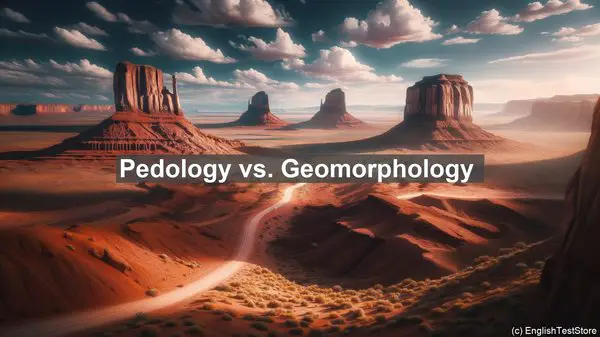
Pedology and Geomorphology are two branches of Geoarchaeology that focus on different aspects of the landscape. Pedology primarily deals with the study of soils, examining their formation, properties, and classification. Soils can provide valuable information about past land use, agriculture, or even climate. Geomorphology, on the other hand, looks at the broader landforms and their evolution over time. By combining the insights from both disciplines, researchers can paint a more complete picture of the past landscape and its dynamics.

Top 10 Commonly Confused Words in Genetic Toxicology

Introduction

Welcome to today’s lesson on genetic toxicology. In this lesson, we’ll be discussing the top 10 commonly confused words in this field. Understanding these terms is crucial for accurate interpretation and analysis of genetic toxicity data. So, let’s dive in!

1. Mutation vs. Polymorphism

The terms ‘mutation’ and ‘polymorphism’ are often used interchangeably, but they have distinct meanings. A mutation is a permanent change in the DNA sequence, while a polymorphism is a variation that occurs in at least 1% of the population. Understanding the difference is vital when assessing the potential impact of a genetic change.

2. Genotoxicity vs. Mutagenicity

Genotoxicity and mutagenicity are related concepts, but they’re not identical. Genotoxicity refers to the ability of a substance to damage DNA, while mutagenicity specifically refers to its potential to induce mutations. Not all genotoxic substances are mutagenic, but all mutagens are genotoxic.

3. Teratogen vs. Carcinogen

Teratogens and carcinogens are both harmful substances, but their effects differ. A teratogen causes birth defects or developmental abnormalities, while a carcinogen is a substance that can cause cancer. It’s crucial to identify and differentiate between these two categories to assess the risks associated with exposure.

4. In vitro vs. In vivo

In vitro and in vivo are Latin terms commonly used in scientific research. In vitro refers to experiments conducted outside a living organism, often in a laboratory setting. In vivo, on the other hand, refers to experiments conducted within a living organism. Understanding these terms is essential for interpreting study results accurately.

5. Positive vs. Negative Control

In any scientific experiment, controls are essential. A positive control is a sample or group where the expected response is known, serving as a reference for comparison. A negative control, on the other hand, is a sample or group where no response is expected. Both types of controls are crucial for validating experimental results.

6. Threshold vs. Non-threshold

When assessing the toxicity of a substance, it’s important to understand the concept of thresholds. A threshold refers to the dose below which no adverse effects are observed. Non-threshold substances, on the other hand, can cause harm even at low doses. Differentiating between these two categories is vital for setting safety standards.

7. Acute vs. Chronic Exposure

Exposure to a toxic substance can be either acute or chronic. Acute exposure refers to a high-dose, short-term exposure, often resulting in immediate effects. Chronic exposure, on the other hand, occurs over an extended period, usually at lower doses. Understanding the duration and intensity of exposure is crucial for assessing its potential risks.

8. Additive vs. Synergistic

When two or more substances interact, their combined effect can be additive or synergistic. Additive effects occur when the combined effect is equal to the sum of the individual effects. Synergistic effects, on the other hand, are greater than the sum of the individual effects. Recognizing these interactions is important for assessing the overall risk.

9. Hazard vs. Risk

In the context of toxicology, hazard and risk are distinct concepts. A hazard refers to the inherent potential of a substance to cause harm. Risk, on the other hand, takes into account the exposure and the likelihood of harm. Understanding the difference is crucial for effective risk assessment and management.

10. Sensitivity vs. Specificity

When evaluating the performance of a diagnostic test, sensitivity and specificity are key parameters. Sensitivity measures the test’s ability to correctly identify true positives, while specificity measures its ability to correctly identify true negatives. Both parameters are important for assessing a test’s reliability and accuracy.